




 Inglês (pdf)
 Artigo em XML
 Referências do artigo

 Tradução automática
 Enviar este artigo por email
 Citado por SciELO
 Similares em
SciELO

 Permalink


INTRODUCTION
Nurses commonly engage in occupational activities involving prolonged standing and walking, which can negatively impact the musculoskeletal system, potentially leading to discomfort and an increased risk of work-related musculoskeletal disorders (WRMSDs) if appropriate support and footwear are lacking (1,2,3). Among WRMSDs, those affecting the foot and ankle are very prevalent, especially among nurses (4,5), likely due to tendon and ligament strain or muscle fatigue(6). Pain in the foot and other severe WRMSDs in that region may lead to increased absenteeism and reduced work efficiency(4,5). Consequently, nursing workforce shortages have become a pressing issue (8).
Despite acknowledging these risks, there has been limited exploration into how footwear can mitigate the adverse effects of prolonged standing on nurses’ foot health and overall well-being. While interventions like exercise therapy and ergonomic adjustments have shown some benefits(9), understanding nurses’ specific footwear needs and tailoring rehabilitation strategies in standing environments remains insufficiently explored.
Investigating the footwear requirements of nurses in prolonged standing settings is crucial, not only for their well-being but also for healthcare system efficiency and patient outcomes. Addressing nurses’ footwear needs can reduce risks, alleviate pain, combat fatigue, and enhance overall health, directly impacting their ability to deliver high-quality patient care (10,11).
Recent studies have begun to define key concepts related to foot health in nurses and preventive measures, as well as footwear characteristics for the general population. Foot and ankle disorders can first appear as knee problems, and the most common and debilitating is pain, followed by numbness, burning feet and structural deformities(4,5). Personalized footwear positively impacts both subjective and biomechanical outcomes, directly influencing foot behaviour while walking or standing (11).
Despite this clarification and ongoing research, there is a lack of systematic analysis regarding the implications of this research on nurses’ foot health and rehabilitation strategies.
To fill this gap, our review aims to comprehensively summarize existing literature on footwear recommendations for nurses in prolonged standing roles. Our primary objective is to elucidate the podiatric benefits and indications of suitable footwear for nurses in standing positions. Through this analysis, we aim to provide insights into healthcare strategies and rehabilitation benefits associated with appropriate footwear selection.
Furthermore, our review seeks to stimulate innovation in footwear design tailored to meet the specific needs of nurses in standing environments. By bridging the research-practice gap, we aim to facilitate evidence-based footwear interventions that promote foot health and enhance nurses’ overall well-being.
METHODOLOGY
LITERATURE SEARCH
To comprehensively summarize, reflect, and critically analyze the possible benefits and relationship between footwear features for nurses exposed to standing environments, a narrative review method was selected. because it allows a subjective examination and interpretation of a complex topic(12). This type of review is also a way to provide a general debate to feed future research(13), particularly when little evidence is available in the literature. Furthermore, it can potentially guide decision-making and organizational policies(14). Narrative reviews are also the most adequate to note gaps and critique research to date and are not meant to define or map concepts. It would be redundant to perform a scoping or systematic review on this topic since very recent reviews have already been developed, like the work of Bernardes and colleagues(4) or Stolt and colleagues(5). The most important need is still to interpret such findings in the light of current knowledge.
The databases used to collect data included MEDLINE (via PubMed), CINAHL (via EBSCOhost), ScienceDirect (via EBSCOhost), and Web of Science. Search terms were combined for each database, considering specific thesaurus (Table 1). Key terms were footwear, shoes, prolonged standing, standing, workplace, workers, and foot.
Table 1 Search Strategies
| MEDLINE (via PubMed) |
|---|
| #1 ("Footwear"[MeSH] OR "Shoes"[MeSH] OR "Footwear"[TIAB] OR "Shoes"[TIAB]) |
| #2 ("Occupational Diseases"[MeSH] OR "Occupational Exposure"[MeSH] OR "Workplace"[MeSH] OR "Occupational Health"[MeSH] OR "Prolonged Standing"[MeSH] OR "Standing"[MeSH] OR "Occupational Diseases"[TIAB] OR "Occupational Exposure"[TIAB] OR "Workplace"[TIAB] OR "Occupational Health"[TIAB] OR "Prolonged Standing"[TIAB] OR "Standing"[TIAB]) |
| #3 ("Workers"[MeSH] OR "Employees"[MeSH] OR "Worker"[TIAB] OR "Employee"[TIAB]) |
| #4 ("Foot"[MeSH] OR "Foot"[TIAB]) |
| #5 #1 AND #2 AND #3 AND #4 |
| Search conducted in January 2023 Filters: English, Portuguese, Spanish. Full text available |
| CINAHL (via EBSCOhost) |
| #1 (MH "Footwear+" OR MH "Shoes" OR "Footwear" OR "Shoes") |
| #2 (MH "Occupational Diseases" OR MH "Occupational Exposure" OR MH "Workplace" OR MH "Occupational Health" OR MH "Prolonged Standing" OR MH "Standing" OR "Occupational Diseases" OR "Occupational Exposure" OR "Workplace" OR "Occupational Health" OR "Prolonged Standing" OR "Standing") |
| #3 (MH "Workers" OR MH "Employees" OR "Worker" OR "Employee") |
| #4 (MH "Foot" OR "Foot") |
| #5 #1 AND #2 AND #3 AND #4 |
| Search conducted in January 2023 Filters: English, Portuguese, Spanish. Full text available |
| ScienceDirect (via EBSCOhost) |
| #1 ("Footwear" OR "Shoes" OR "Footwear" OR "Shoes") |
| #2 ("Occupational Diseases" OR "Occupational Exposure" OR "Workplace" OR "Occupational Health" OR "Prolonged Standing" OR "Standing" OR "Occupational Diseases" OR "Occupational Exposure" OR "Workplace" OR "Occupational Health" OR "Prolonged Standing" OR "Standing") |
| #3 ("Workers" OR "Employees" OR "Worker" OR "Employee") |
| #4 ("Foot" OR "Foot") |
| #5 #1 AND #2 AND #3 AND #4 |
| Search conducted in February 2023 Filters: English, Portuguese, Spanish. Full text available; Access type: open access. Open archive. |
| Web of Science |
| #1 ("Footwear" OR "Shoes") |
| #2 ("Occupational Diseases" OR "Occupational Exposure" OR "Workplace" OR "Occupational Health" OR "Prolonged Standing" OR "Standing") |
| #3 ("Workers" OR "Employees") |
| #4 ("Foot") |
| #5 #1 AND #2 AND #3 AND #4 |
| Search conducted in February 2023 Filters: English, Portuguese, Spanish. Full text available. Open access. |
No limitation regarding the timeframe was considered. Only filters regarding Portuguese, English and Spanish studies and full text available were used.
REVIEW QUESTION
The review question followed the PICo mnemonic, where P stands for population, I stands for the phenomena of interest, and Co for context: «What are the footwear indications and podiatric benefits for nurses exposed to standing environments?» and «What specific footwear features can be found for nurses?». The phenomenon of interest - footwear - is considered any wearable developed to protect, accommodate and assist in the biomechanical functions of the foot and ankle, influencing postural stability since it enhances plantar somatosensory feedback and foot motion(15). The other phenomena of interest - podiatric benefits - were considered those that influence the podiatric profile (composed of kinematic variables like foot eversion, external foot rotation, the medial longitudinal arch, and kinematic variables, like plantar pressure, the centre of pressure displacements during gait) and general foot health, like skin health, nail health or foot pain(16). Regarding population, all workers exposed to standing environments, which are those with characteristics of prolonged standing and/or prolonged walking activities, as defined by Anderson and colleagues(11), spend at least 5% of their occupational time standing.
INCLUSION AND EXCLUSION CRITERIA
The review included qualitative and quantitative studies, guidelines, recommendations, and opinion texts. Studies were considered if they described the wearer's footwear features and respective benefits. Studies about footwear for sedentary workers or only mentioning general characteristics of the shoe were not included. Exclusions were also applied for papers about therapeutic foot orthosis for specific foot and ankle disorders.
SCREENING PROCESS AND REVIEW EVALUATION
Two reviewers initially performed the search, which screened the results by title and abstract. A third reviewer helped to screen the following results, and the participation of a fourth person solved conflicts. The screening and selection process is shown in Figure 1 through a PRISMA flowchart(17). Two tools were developed and used to collect and synthesize data. The first one included the main study characteristics (Table 1) - author, year, country, study aim, design, sample, main findings - and the second specified the results for the two research questions (Table 3) - footwear features, indications, podiatric benefits and rehabilitation.
Table 2 Study Sample Characteristics (n=23)
| Author, Year, Country | Study Aim | Design | Sample | Main Findings |
|---|---|---|---|---|
| Hansen et al., 1998, Sweden(22) | Study the significance of mat and shoe softness during prolonged work in an upright position. | Randomised Controlled Trial | 8 healthy women | Soft shoes reduce edema formation. |
| Goonetilleke & Luximon, 2001, Hong Kong(23) | Illustrate some theories and ways to think of footwear comfort. | Qualitative Research | n/a | Inside shoe climate (temperature, humidity), weight, materials, and cushioning affect footwear comfort. |
| King, 2002, U.S.A(24) | Compare the effects of floor mats and shoe in-soles on workers’ perceptions of tiredness, fatigue, and discomfort. | Cross-Sectional Study | 27 factory workers | Insoles decrease discomfort when standing. |
| Orlando & King, 2004, U.S.A(25) | Investigate assembly line workers’ perceptions of fatigue and discomfort after standing for 8 hours. | Quasi-experimental study | 16 factory workers | Insoles might reduce the space in shoes. |
| Kersting et al., 2005, Germany(26) | Identify the effect of varied footwear on loading during catering-specific movements and in situations other than level walking, i.e., walking up and down stairs. | Cross-Sectional Study | 16 trained waiters | Shoes should have a soft but contoured footbed to provide midfoot support to change pressure values. |
| Chiu & Wang, 2007, Taiwan(19) | Evaluate three nursing footwear and identify features for adequate shoe support during nursing activities. | Cross-Sectional Study | 12 nurses | Arch support reduces muscle fatigue in the calf and disperses pressure. Outsole thickness influences metatarsal pressure values and low back discomfort. EVA or PU materials reduce foot discomfort. |
| Witana et al., 2009, China(27) | Evaluate the effects of the shape characteristics of the footbed of a shoe on a wearer’s perceived feelings of comfort/discomfort. | Cross-Sectional Study | 32 volunteer females | A good footbed design is important for enhanced comfort. |
| Gell et al., 2011, U.S.A(28) | Examine lower extremity fatigue and its relationship to ergonomic, medical, and demographic factors among industrial workers. | Cross-Sectional Study | 407 factory workers | Former shoe outsoles increase lower extremity fatigue. |
| Lin et al., 2012, Taiwan(29) | Examine the effect of different shoe and floor conditions on standing discomfort in the workplace and laboratory. | Cross-Sectional Study | 24 volunteer subjects | Standing on a mat while wearing sports shoes was the most comfortable. Standing on a mat was always more comfortable than standing on a hard floor, and the discomfort increased over time. Subjective discomfort rating is more influenced by floor type than by shoe condition. |
| Jefferson, 2013, U.S.A(30) | Examine the relationship between low back pain and lower extremity pain and determine the effect of cushioning the floor surface, using cushioning insoles, on back and lower extremity pain. | Cross-Sectional Study | 306 factory workers | Cushioned insoles are effective in reducing the mean pain score on the foot. |
| Menz, et al., 2013, U.S.A(31) | Examine the associations of foot posture and function with low back. | Longitudinal Study | 1930 healthy volunteers | Foot orthoses, which modify abnormal foot function, have a role in preventing and treating low back pain. |
| Waters & Dick, 2015, U.S.A(32) | Review health risks and interventions for workers and employers exposed to long-standing positions. | Literature Review | Workers and employers exposed to prolonged standing positions | The effect of shoes is negligible after 2 hours. Non-heeled shoes reduce the prevalence of varicose veins. |
| García-Hernández, et al., 2016, Spain(33) | Evaluate the effects of customised foot orthoses on work-related musculoskeletal disorders. | Cross-Sectional Study | 48 metal industry workers | Customised orthoses are effective in reducing and preventing physical disorders and discomfort. |
| Speed et al., 2018, Australia(34) | Deliver a methodological and rigorously sound evaluation of literature on the effectiveness of softer flooring, anti-fatigue mats and shoe insoles on a range of outcomes related to discomfort and fatigue in those who stand for prolonged periods at work. | Literature Review | Healthy individuals of working age (16-65 years) who performed tasks in a constrained standing posture for at least 3 h. | Statistically significant reduction in foot discomfort with insoles than mats or linoleum. Mat + sport shoes: least uncomfortable condition. Greater influence of floor type than shoe condition. Mean low back pain score 28% with insoles. Mean foot pain scores 32% with insoles. Slight increase in low back pain and foot pain each day with normal footwear. Lower discomfort level and no increase each day with insoles. Lowest discomfort scores with combined condition followed by insoles then mats. Insoles: most comfortable in feet, ankles, and low back. |
| Anderson et al., 2018, U.K.(11) | Explore the effects of prolonged standing and the impact of altering footwear material hardness over three hours on plantar pressure, blood pooling, muscle activity, kinetics, kinematics and subjective discomfort. | Cross-Sectional Study | 12 healthy participants | Softer footwear reduces lower back discomfort. |
| Grau & Barisch-Fritz, 2018, Germany(35) | Examine static and dynamic foot loading of workers at different workplaces to determine whether foot morphology changes between the different loading situations. | Cross-Sectional Study | 1024 industrial workers | Width and girth measures influence static and dynamic loading. |
| Buldt & Menz, 2018, Australia(36) | Determine the prevalence of incorrectly fitted footwear and examine the association between incorrectly fitted footwear, foot pain, and foot disorders. | Literature Review | n/a | Incorrect width and length are associated with foot pain and foot disorders. |
| Stolt et al., 2018, Finland(9) | Describe operating room nurses’ perceptions of foot health and identify promoting and hindering factors. | Qualitative Descriptive Study | 14 nurses | Ill-fitting footwear causes foot pain, tiredness, numbness, and digital deformities. |
| Tarrade et al., 2019, France(37) | Assess the possible benefits of custom-made foot orthoses among prolonged-standing workers. | Cross-Sectional Study | 34 standing workers | Custom-made foot orthosis is an effective and simple solution to relieve foot pain in prolonged standing workers. |
| Anderson et al., 2020, U.K.(38) | Develop a range of insole options to maintain comfort during long-standing periods and test insole material preferences in the workplace. | Cross-Sectional Study | 22 workers with no limb injuries | Medial midfoot pressure increases by using a softer material in the heel/forefoot section or having a harder material under the medial arch. |
| Getie et al., 2021, Ethiopia(21) | Determine the prevalence and associated factors of ankle-foot pain among nurses. | Cross-Sectional Study | 366 nurses | Comfortable footwear decreases fatigue and discomfort in the lower extremities. Poor-fitting footwear leads to discomfort and causes foot/ankle tiredness, numbness, and digital deformities. |
| Cockayne et al., 2021, U.K.(20) | Assess the clinical effectiveness and cost-effectiveness of 5-star GRIP-rated slip-resistant footwear in preventing slips in the workplace compared with usual footwear. | Randomised Controlled Trial | 4553 nurses | Reduced slips in the workplace. |
| Böhm & Hösl, 2010, Germany(39) | Investigate the influence of boot shaft stiffness on gait performance on an uneven surface. | Cross-Sectional Study | 15 healthy young adults | Boot shaft stiffness increases co-contraction and eccentric energy absorption at the knee joint. |
EMG: electromyography MG: medial gastrocnemius; TA: tibial anterior; PTI: pressure time integral; MTPJ1: first metatarsophalangeal joint; MPTJ2-3: second and third metatarsophalangeal joint; S and D: static and dynamic
Table 3 Footwear Indications and Podiatric Benefits
| Feature | Footwear Indications | Podiatric Benefits and Rehabilitation |
|---|---|---|
| Insoles | Viscoelastic insoles | Reduction in general fatigue, particularly on the lower limbs(24,40) |
| Additional insole | Decreases firmness rating from 4.1 to 2.55, general fatigue from 3.20 to 2.45, and leg fatigue from 3.4 to 2.18 (11,24) | |
| Thin soles in nursing shoes | Increases the number of discomfort complaints in the back, thigh, knee, and shin (9,19) | |
| Stiffest midsole vs soft insole/high grip/increased foot support. No arch support | Higher EMG values for peroneus longus and gastrocnemius muscles (26) | |
| Insole type | A harder heel/forefoot piece increases peak pressure values for the whole foot, heel, medial and lateral midfoot, MTPJ1, hallux, and toes. In the MTPJ2-3 and toe region, soft heel/forefoot + firm arch piece decreases pressure compared to medium heel/forefoot, soft and medium arch pieces). For soft heel/forefoot, medium/firm arch piece insoles contact area increases. The lowest values were seen for insoles with firm heel/forefoot insole(38). Polyamide-12 material with a 2-mm thickness and neutral insoles (thickness 3mm; 160 kg/m3 density; hardness 40-45 shore)(37). | |
| Cushioning (Hardness/Softness) | Hard wooden clog vs Sports shoes | No impact on self-reported discomfort. Sports shoes reduce blood pooling and edema formation (11,22) |
| Harder footwear (type C durometer reading over 32) vs Low hardness level (type C durometer reading below 18) | Increase the risk of lower extremity self-reported fatigue (11,28) | |
| Harder shoes/Lack of cushioning | Increase in low back discomfort (static and dynamic tasks). Higher PTI for the hallux region2. Contributes to high peak pressures (39). | |
| Softer shoes | (S and D tasks) Greater PTI at the heel, whole foot, and lateral midfoot. (S and D tasks) More contact areas in the MTPJ2-3 area. (S and D tasks) Increased hip adduction over time. Stance width is greater for static tasks(38). For both 2-h standing and standing/walking, the largest edema-preventing effect occurs with the combination of soft shoes and a hard floor(22). | |
| Structural Architecture | Width | Impact on pressure distribution in the toes; sore toes(9,19) |
| Length | Correctly fitted shoes are based on the recommendation of 10-20 mm clearance between the foot and the shoe, increasing pain and risk of foot disorders (36). | |
| Increased arch support | Increases the area of the foot in contact with the shoe, reducing peak pressures; Increased activation of the medial gastrocnemius (19,39) | |
| Heel | Not advised heels higher than 2 inches/2cm(40,41) | |
| General Indications | To minimize risk from prolonged standing, footwear should: firmly grips the wearer’s heel to prevent slippage, instability, and discomfort; maintains the natural shape of the foot; have closed toes with adequate space to move toes; have shock-absorbing, cushioned insoles with arch supports. Do not wear flat shoes (41) | |
| Slip-resistant | 5-GRIP-rated slip-resistance footwear reduced the rate of slips by 37% (20) | |
| Special Characteristics | Sports shoes vs bare feet | Subjective discomfort decreases (29,40) |
| Flat-bottomed shoes vs unstable shoes | Compared to unstable shoes, the subjective rating of lower leg discomfort increases with flat-bottomed shoes. Compared to unstable shoes, lower leg volume (cm3) increases with flat-bottomed shoes. Unstable shoes, when compared to flat-bottomed shoes, contribute to higher lower-leg muscles activity levels, particularly MG and TA |
EMG: electromyography; MG: medial gastrocnemius; TA: tibial anterior; PTI: pressure time integral; MTPJ1: first metatarsophalangeal joint; MPTJ2-3: second and third metatarsophalangeal joint; S and D: static and dynamic
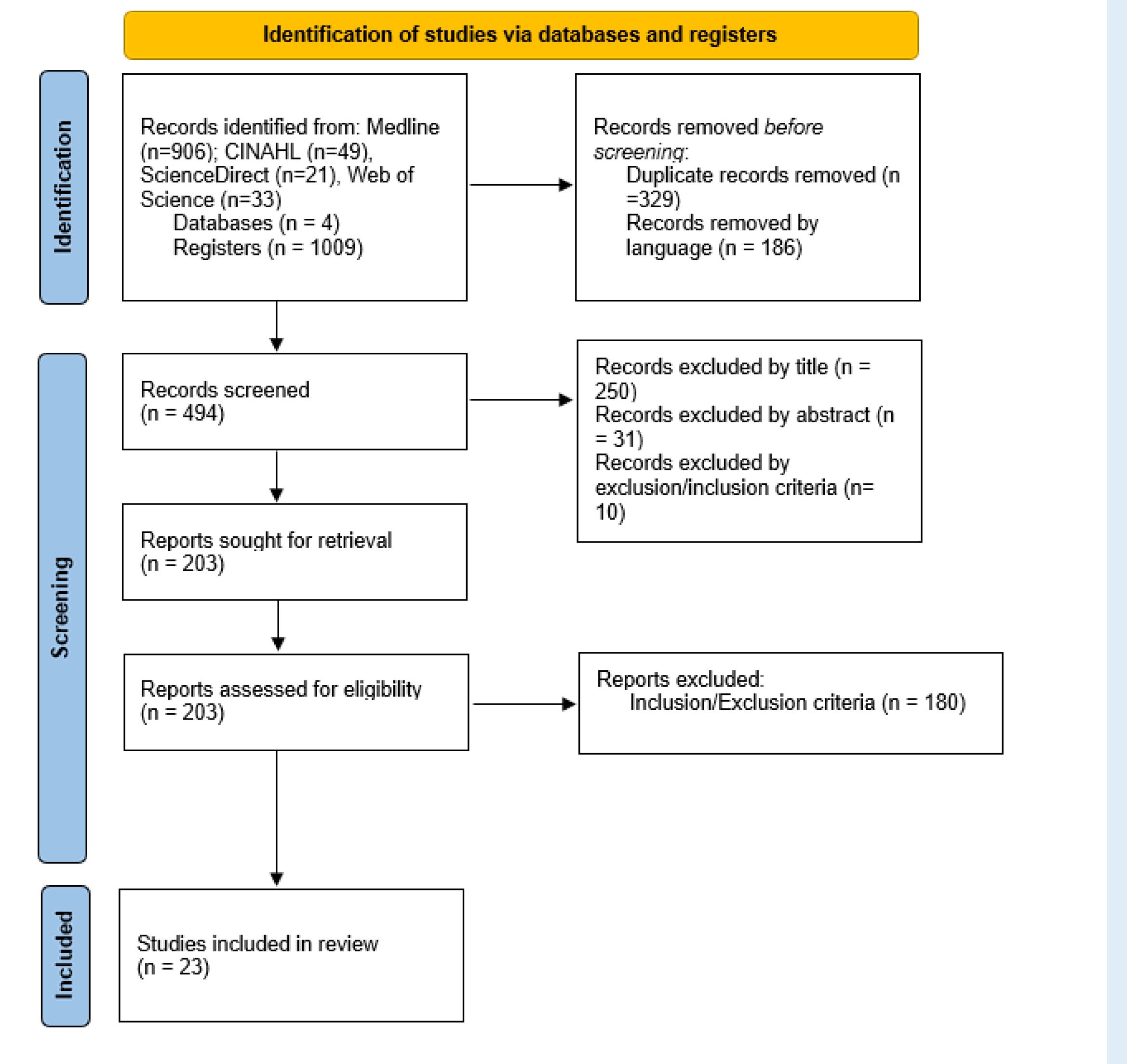
The review report was assessed for quality and rigour using the SANRA guideline(18).
RESULTS
STUDY CHARACTERISTICS
A total of 23 studies (Table 2) were included in this review, published between 1998 and 2021, from Hong Kong (n = 1), the United States of America (n = 6), Germany (n = 3), Taiwan (n = 2), China (n = 1), Spain (n = 1), Australia (n = 2), United Kingdom (n = 3), Finland (n = 1), France (n = 1), and Ethiopia (n = 1), Sweden (n = 1). Most (n = 13) were cross-sectional studies. One used a qualitative research method, one was a quasi-experimental study, four were a literature review, and two were randomised controlled trials.
Only four studies exclusively studied a sample of nurses(9; 19-21). The remaining studies used multiple professionals exposed to standing environments, such as factory/industry workers, waiters, or healthy volunteers in various critical occupations.
Benefits regarding footwear are dependent on many structural and architectural features. This relationship is described in Table 3. Four main categories can be identified, and their respective influence on foot health is depicted.
Prescriptions regarding insoles influence mainly perceived fatigue and discomfort levels, especially at the level of the gastrocnemius. Viscoelastic insoles are the most recommended, although the thickness level is inversely proportional to increased musculoskeletal discomfort.
The cushioning investment inside the shoe also influences fatigue levels but seems to exert a particular effect on blood pooling, influencing other body regions, like the lower back. On the other hand, there seems to be no consensus on whether there is a clear relationship between softer shoes and varicose vein prevention.
The general structural architecture of the shoe, for example, width or length, is significantly reported as a factor regarding peak pressure on toes and having a direct relationship with the shape of each foot. It is one of the features that need the most personalisation. The formation of calluses and blisters seems to be directly related to plantar pressure generated inside the shoe, thus the need to acquire an adjusted footwear width and support at the level of longitudinal arches.
Special characteristics were regarded as those related to the usage of sports shoes or unstable shoes, for example, directly influencing perceived fatigue and lower limb swelling.
DISCUSSION
This study described and analysed the indications and potential podiatric benefits regarding footwear and nursing professionals exposed to standing environments. Few studies could provide an adequate answer, thus indicating that research on this topic is scarce.
Footwear’s influence on comfort during the working day has been explored in many professions, but mainly in industry and factory workers(24-25,28,30,33,35), where prolonged standing is frequently required. A limited number of studies on nurses hinders the adequate development of preventive interventions in this population. Remarkably, we have discovered a substantial increase in sample size across recent studies in this cohort(11; 28-29). This finding suggests a growing interest within the scientific community regarding this topic and the implementation of more representative designs to enhance the studies’ external validity.
While numerous studies have examined the impact of improperly fitted footwear on the podiatric health of workers in standing environments(9, 11, 34), we found that most authors have yet to comprehensively evaluate how podiatric health affects important organisational outcomes such as productivity, absenteeism, and job retention, across different sectors and professions.
Footwear is paramount in promoting or impeding working ability from a foot health standpoint. When footwear is first appropriately and is suitable for the given circumstances, it contributes to overall well-being. However, ill-fitting footwear can lead to pain and discomfort, reducing the quality of life. Consequently, selecting properly sized footwear tailored to specific working conditions necessitates a comprehensive understanding of footwear characteristics. Employers can actively support the foot health of nurses by investing in appropriate footwear and providing options that align with the individual’s foot health status.
The current body of research primarily focuses on investigating the impact of insoles on podiatric health. In contrast, other areas (e.g., psychological comfort, footwear design acceptance, and decontamination-friendly materials' impact) remain largely unexplored. More research is needed, particularly from the user’s perspective, how they perceive their footwear, and the specific characteristics they value.
Despite a careful option regarding footwear, this protective measure should not be applied alone, as its features work with the person’s physical characteristics, behaviours, and external factors. Subjective measures should also be considered for nurses’ comfort, which is influenced by footwear’s features related to fit, midsole cushioning, heel elevation, weight, sole flexibility/bending stiffness, midsole geometry, outsole geometry, lacing, upper material, shoe microclimate, insoles, and wear time(31). Furthermore, several studies have alerted to the positive effects of anti-fatigue mats on nurses, which can reduce perceived discomfort after several hours of standing(24,42).
It is crucial for future research in this field to thoroughly investigate the influence of standing environments and occupational footwear, considering the significant variations in foot health observed among different worker cohorts. While providing general footwear guidelines (e.g., architecture, insole, cushioning) is necessary to establish a baseline that can be universally adopted across various organisations and sectors, it is equally important to explore specific characteristics that can mitigate foot health complications in nurses at high risk of those who already have a diagnosed condition (e.g., varicose veins). An important role is also allocated to the rehabilitation nurse, who is in a core position of prescribing such adaptive and technical aids to peers, or even working as a consultant to occupational professionals.
Finally, we argue that current research in this area has not fully capitalised on the potential of advancements in significant fields such as biotechnology, health sensors, artificial intelligence, and genome sequencing, which can contribute to precision podiatric health(43). By considering the variability in genes, working environments, and lifestyles among individuals, researchers can shift the paradigm from “evidence-based practice” to a more tailored approach(43, 44). This paradigm shift will enable a deeper understanding of how these factors interact and affect podiatric health, ultimately leading to more precise and personalised interventions. By embracing innovative technologies and cindering individual variations, future research can pave the way for advancements in occupational health and improve the overall well-being of workers.
Some limitations are inherent in this study due to the review type, which was adequate to the type of search question and evidence on the main topic, but does not allow making strong causal assumptions between footwear and podiatric benefits. Furthermore, unlike other types of reviews, narrative reviews rely heavily on the author’s interpretation and selection of studies, which introduces subjectivity and potential bias. Consequently, findings may lack the rigor and replicability associated with systematic methodologies. Another limitation is that narrative reviews are typically descriptive and interpretative, focusing on summarising existing literature rather than establishing causality.
We have found very few studies with nurses. Nevertheless, the results regarding footwear found in different populations could be extrapolated to other sectors with the due adaptations(33).
CONCLUSION
Our research on footwear characteristics and podiatric benefits among nurses in standing environments has yielded valuable insights. While we found a limited number of directly applicable results specific to nurses, it is important to acknowledge that most available findings pertain to other professions.
The significance of insoles and cushioning emerged as key aspects in promoting foot health and comfort. However, further investigation is needed to explore nurses’ specific needs and requirements regarding footwear design, considering the unique demands of their work environment and challenges.
Our study highlights the need for targeted research on footwear interventions tailored specifically to nurses. This includes examining the impact of insoles and cushioning materials on reducing fatigue, discomfort, and the incidence of foot-related issues in this professional group. Such investigations could contribute to developing evidence-based guidelines and recommendations for footwear selection and design in nursing practice.
Expanding the body of knowledge in this area can improve the understanding of footwear’s role in enhancing nurses' overall foot health and well-being. This, in turn, may lead to interventions and strategies that mitigate the potential negative effects of prolonged standing and promote optimal foot health among nurses, ultimately benefiting their overall occupational performance and quality of life.

