




 Inglês (pdf)
 Artigo em XML
 Referências do artigo

 Tradução automática
 Enviar este artigo por email
 Citado por SciELO
 Similares em
SciELO

 Permalink


1. Introduction
In recent years, higher education has faced profound challenges due to the COVID-19 pandemic. The impact of this global crisis revealed the vulnerability of educational infrastructures and the near-exclusive dependence on in-person teaching in many institutions. The lockdown forced an abrupt transition to remote learning, exposing gaps both in technological infrastructures and in the pedagogical adaptation to the new realities of distance education (Hodges et al., 2020). In this context, the need for effective digital tools that facilitated learning and continuous support outside the classroom became evident.
The adoption of digital platforms, often limited to learning management systems (LMS), proved insufficient to meet the needs of students and professors. The lack of interactivity and personalization in the teaching and learning processes led to an increased sense of isolation among students, compromising their engagement and motivation. It was in this context that the EasyAsk platform was conceived. With the goal of promoting continuous collaboration between students and professors, EasyAsk emerged as a complementary solution, integrating Artificial Intelligence (AI) to facilitate the teaching-learning process, personalizing each student's experience, and promoting a knowledge-sharing environment.
EasyAsk aims to be a distance learning platform that, by integrating AI, can moderate interactions, suggest relevant content, and facilitate the resolution of doubts, promoting collaborative learning. Recent studies highlight the positive impact of collaborative digital tools in education, especially when associated with technologies like AI, which enables personalized learning and optimizes feedback to students (Luckin et al., 2020; Holmes et al., 2021). The use of AI in education, as implemented in EasyAsk, not only automates repetitive tasks, such as forum moderation and assignment grading, but also adjusts the learning experience to the needs and pace of each student, providing continuous and tailored support to their progress.
Additionally, the platform fosters peer collaboration, creating an environment where students can work together to solve problems, share knowledge, and participate in discussions moderated by both professors and AI. This type of interaction, according to studies such as Gros et al. (2021), enhances student engagement, improves learning outcomes, and contributes to the creation of a sense of belonging to the academic community, which is essential in distance learning contexts.
2. Theoretical Framework
2.1 The Impact of the Pandemic on Higher Education
The COVID-19 pandemic introduced unprecedented challenges to the education sector, particularly in higher education, by forcing an abrupt transition to online learning. Hodges et al. (2020) characterize this process as "emergency remote teaching," highlighting the unpreparedness of many higher education institutions to swiftly and effectively adopt distance learning. This transition exposed weaknesses in both technological infrastructures and pedagogical adaptation to a new paradigm of remote teaching (Bozkurt & Sharma, 2020).
One of the main challenges of remote teaching was to ensure continuity of learning and promote meaningful interactions between students and faculty. Traditional learning management systems (LMS), such as Moodle and Blackboard, although facilitating content management and assignment submission, proved insufficient to guarantee an interactive and engaging experience, contributing to students' sense of isolation (Dhawan, 2020). The OECD (2021) highlights that the digitalization accelerated by the pandemic underscored the urgent need for tools that optimize the teaching-learning process and promote more dynamic interactions.
In this context, the EasyAsk platform was developed to address some of these challenges, focusing on optimizing the search for answers to existing questions through the use of Artificial Intelligence (AI). EasyAsk’s AI functionality allows students to access answers related to the questions they are investigating, reducing redundancy and improving efficiency in resolving queries, while simultaneously promoting peer collaboration.
2.2 Artificial Intelligence in Education
Artificial Intelligence has emerged as a central technology in optimizing educational processes, particularly in information retrieval and managing large volumes of data. Tuomi (2022) emphasizes that AI, when properly applied, can transform how students find and use information in learning environments, increasing the effectiveness and accuracy of data retrieval.
In education, AI has often been used to assist in adaptive search and content recommendation. Tools like Google Scholar and Semantic Scholar use AI algorithms to suggest relevant articles based on users' previous searches. The EasyAsk platform uses AI in a similar way, facilitating the search for similar answers. When a question is entered into the platform, the AI algorithm searches the database for similar questions that have already been answered, presenting the most appropriate responses. This process helps reduce question duplication and improves knowledge circulation within the platform.
Thus, AI in EasyAsk aims primarily to optimize search functions, enabling students to quickly access relevant solutions without having to ask the same questions repeatedly. This specific application of AI distinguishes itself from other approaches that focus on content personalization or adjusting teaching to student progress (Holmes et al., 2021), being exclusively directed at improving the efficiency of information retrieval and user interaction within the platform.
2.3 Collaborative Learning and Social Interaction
Collaborative learning has been widely recognized as an effective strategy to enhance the distance learning experience. Vygotsky (1978) argues that social interaction is fundamental to cognitive development, as students learn more effectively when interacting with their peers. In online learning environments, this collaboration becomes even more relevant to keep students engaged and foster a sense of community.
Distance learning platforms, such as EasyAsk, facilitate collaborative learning through discussion forums and answer sharing, allowing students to learn from one another. The AI-powered search functionality, which retrieves answers to similar questions, fosters a peer learning environment where solutions previously provided by other students or teachers are reused and shared within the user community.
Gros et al. (2021) demonstrate that collaborative learning platforms contribute to student engagement, creating a space where knowledge sharing is encouraged. EasyAsk supports this knowledge sharing by reusing the information already present in the platform, allowing students to access validated answers and interact with these responses more efficiently and effectively.
2.4 Gamification and Student Motivation
Gamification has proven to be an effective methodology for increasing student motivation in digital environments. The application of game design elements, such as rewards, continuous feedback, and progression systems, enables educational platforms to improve student participation and provide a more interactive learning experience (Sailer et al., 2021).
The EasyAsk platform integrates gamification as a way to encourage active student participation through a points and ranking system. Students can earn points by participating in discussions and providing useful answers, contributing to a more dynamic learning environment. Deterding et al. (2023) argue that reward systems are effective in improving student engagement and motivation, by promoting healthy competition and encouraging greater participation.
Although gamification in EasyAsk does not involve content personalization or the adaptation of learning paths, the points and ranking elements make the experience more engaging, improving student participation in problem-solving and fostering a healthy competitive dynamic.
2.5 Accessibility and the Importance of Responsive Platforms
Accessibility and ease of use are essential components for the success of any distance learning platform. With the increasing use of mobile devices for educational purposes, it has become imperative for platforms to be responsive and easily usable across different devices.
Recent studies indicate that over 60% of higher education students use mobile devices to access educational content (Wang & Woo, 2022). EasyAsk was developed with this principle in mind, offering a responsive interface that is fully accessible on mobile devices. This allows students to search for answers and participate in discussions efficiently, regardless of the device they are using.
Accessibility ensures that the platform is inclusive and that all students, regardless of their technological conditions, have the opportunity to actively participate.
3. Methodology
3.1 Study Design
The aim of this study was to develop and validate the EasyAsk platform, focused on optimizing the process of searching for answers to user-formulated questions through a simplified version of Artificial Intelligence (AI). The study followed an iterative, user-centered approach and was based on user-centered design principles and Agile development. The platform was designed to facilitate the search for existing answers, promote collaboration among students, and encourage participation through gamification.
The development of EasyAsk was structured into three main phases: needs analysis, prototype development, and continuous evaluation based on user feedback.
3.2 Study Phases
3.2.1 Needs Analysis
The first phase of the study, conducted between September to December 2021, focused on identifying technological and pedagogical gaps in distance learning, with the aim of guiding the platform's development. Data were collected from 150 students and 5 teachers from a higher education institution through surveys and semi-structured interviews. This analysis identified the following key areas for improvement:
Difficulty in searching for answers: Students reported that they often struggled to locate answers to similar questions on the distance learning platforms they used.
Redundancy of questions: Teachers observed that many repeated questions appeared in online discussions, suggesting the need for a more efficient search tool.
Lack of peer collaboration: The need to promote greater interaction and collaboration among students, especially in remote learning contexts, was also emphasized.
Based on these needs, the development of EasyAsk focused on implementing an AI-assisted search functionality to help students find previously given answers to similar questions, while simultaneously promoting collaboration among users.
3.2.2 Prototype Development
Between November 2021 and June 2022, the EasyAsk prototype was developed using an Agile approach. The initial prototype included three main features:
AI-powered search: The search functionality was developed using a simplified version of Artificial Intelligence, designed to search for similar questions in the platform's database. The AI automatically performs searches based on keywords provided by users, allowing them to efficiently find relevant answers without the need for manual queries.
Gamification system: A points and rankings system was integrated to encourage active student participation. Students earn points by providing useful answers or participating in discussions, promoting greater engagement.
Collaborative forums: The platform also provides discussion forums where students can collaborate on problem-solving and share answers with each other. This feature aims to foster collaborative learning and peer interaction.
The AI-powered search functionality, while limited in complexity, was designed to meet user needs, providing them with a simple way to access information already available on the platform.
3.2.3 Continuous Evaluation and Iteration
After the prototype was developed, the platform was tested by a pilot group of 150 students and 5 teachers during the second semester of the 2021-2022 and 2022-2023 academic year. The platform evaluation took place over four months and included the following activities:
Satisfaction surveys: Questionnaires were distributed to students and teachers to gather feedback on the platform's usability, the functionality of the AI-powered search, and the impact of gamification on user engagement.
Semi-structured interviews: Interviews were conducted with teachers to obtain a more detailed view of the advantages and challenges of using EasyAsk in the context of distance learning.
Interaction log analysis: The platform's usage data were analyzed, including the frequency of AI-powered searches and participation in collaborative forums.
3.2.4 Revisions and Improvements Implemented
Based on the feedback collected, several improvements were made to the platform. The main changes included:
AI functionality adjustments: The question matching was refined to improve the accuracy of relevant answer searches based on the keywords entered by users.
Database expansion: The question-and-answer database was expanded to include a greater variety of content, ensuring that the AI could provide a broader range of responses.
Gamification system enhancements: The gamification system was adjusted, introducing badges and new progression levels to further motivate students to participate in discussions and provide useful answers.
3.3 Continuous Review and Future Development
After the implementation of these improvements, EasyAsk continues to be reviewed and adjusted based on ongoing user feedback. Future plans include:
Improving AI functionality: Continuing to refine the accuracy of AI-powered searches, ensuring that the matching between questions and answers becomes progressively more effective.
Integrating new tools: Considering the addition of data visualization technologies that can provide a better understanding of the answers presented to students.
The continuous development of EasyAsk aims to ensure that the platform remains aligned with user needs and continues to evolve to meet the increasing demands of digital education.
3.4 Final Considerations
The methodology adopted in the development of EasyAsk followed an iterative, user-centered approach, based on an initial analysis and continuous evaluations. The simplified version of Artificial Intelligence proved effective in searching for questions and answers, while gamification and the promotion of student collaboration were effective strategies for increasing engagement. Continuous revisions and a focus on constant improvements ensure that EasyAsk continues to evolve, providing a robust solution for distance learning.
4. Development of the EasyAsk Platform
The EasyAsk platform was designed with the primary objective of creating a collaborative and reusable database of questions and answers, initially focusing on key areas such as programming, algorithms, and databases. These areas were selected due to their relevance in the teaching of technological subjects and the high demand for clarifications in these topics. The database was structured to allow continuous access to questions and their respective answers without the constant need for intervention from teachers or users, thus facilitating autonomous and efficient learning.
This concept is anchored in the principles discussed in the theoretical framework, which emphasize the importance of digital infrastructures in promoting collaboration and the reuse of knowledge among students and teachers (Luckin et al., 2020; Gros et al., 2021). The goal is to optimize access to relevant information, promoting effective interaction among users and ensuring the continuous reuse of validated answers.
4.1 Platform Features and Objectives
Collaborative Database
The collaborative database of EasyAsk was designed to provide a continuous repository of questions and answers related to essential topics such as programming, algorithms, and databases. This feature offers an accessible knowledge repository, facilitating autonomous learning by allowing users to quickly access validated answers, eliminating the need for repetitive questions.
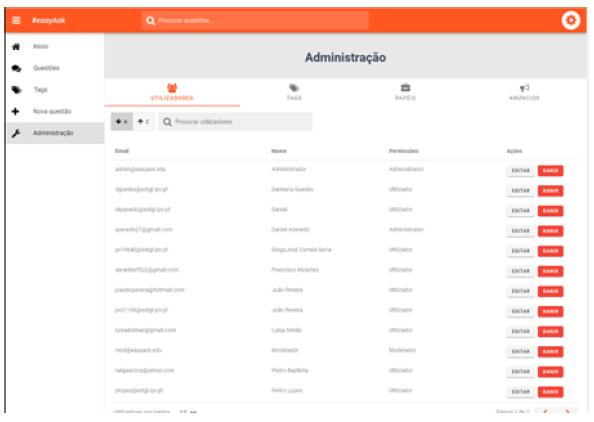
Figure 1 presents the platform's back-office, where administrators and teachers can moderate and organize submitted questions and answers, ensuring the availability of high-quality, validated information.
AI-Powered Question Search
The AI-powered search functionality was implemented to optimize access to previously provided answers on the platform. Using a simplified version of Artificial Intelligence, this feature allows the identification of similar questions in the database based on the keywords entered by users. While the AI does not directly adapt the learning experience, it provides a more efficient search process, facilitating access to validated answers and promoting the reuse of existing knowledge.
The AI-powered search aims to provide quick access to already validated answers, promoting efficiency and the reuse of knowledge stored in the database, minimizing question repetition, and facilitating user navigation.
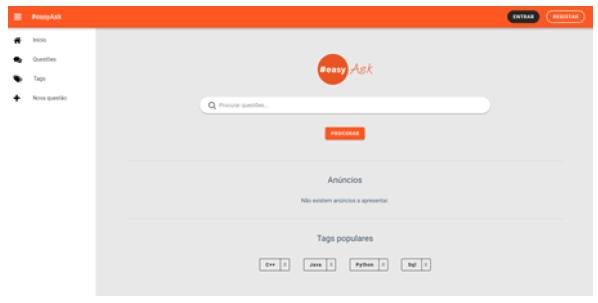
Figure 2 illustrates the mechanism for searching existing questions in the database, simplifying the search for similar answers based on the entered keywords.
Submission and Response to Questions
EasyAsk allows users to submit questions and answers using text, images, or videos. This feature is particularly useful in technical areas that require more detailed explanations, offering greater flexibility in how questions are posed and resolved.
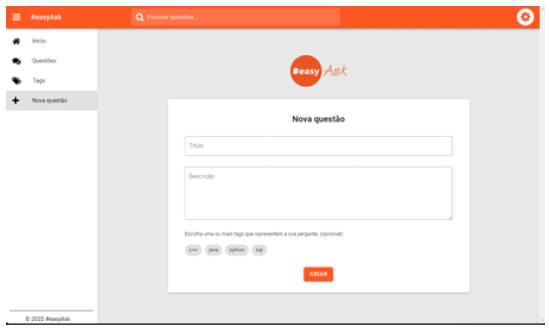
In Figure 3, the submission form for new questions is shown, where users can attach multimedia files to complement their queries. This option is especially valuable for explaining issues in fields such as programming, where screenshots of errors or explanatory videos can facilitate more accurate problem resolution.
Practical example: A student struggling with MySQL database configuration can submit a question accompanied by a screenshot of the error, enabling a more targeted and precise response from professors or peers.
Gamification and User Ranking
The gamification feature was designed to encourage active user participation. The platform includes a voting system in which the most useful answers are highlighted based on community evaluations, rising in the ranking. This dynamic promotes the creation of quality answers and healthy competition among users.
Objective: To encourage active participation and the creation of relevant content through a peer review and gamification system.
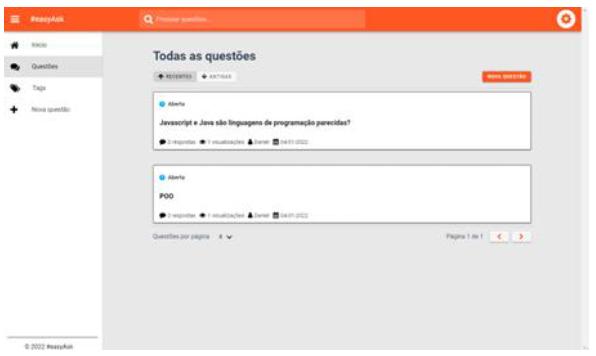
In Figure 4, all submitted questions are displayed, ranked by popularity and relevance, making it easier to navigate and consult the top-voted answers.
In Figure 5, the response form for a new question is shown, where users can provide answers in text, image, or video format.
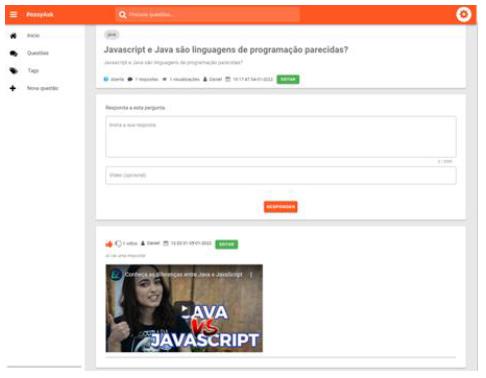
Each answer is subject to voting by other users, allowing the most upvoted responses to be highlighted, making it easier to consult high-quality answers in the future.
Practical example: A software development student can answer a question about class implementation in Java by using a video to explain the concept of inheritance. If their response is well-rated, it rises in the ranking and becomes more visible to other users with similar questions.
Practical example: A software development student answers a question about class implementation in Java, using a video to explain the inheritance concept. Their response receives several positive evaluations, climbing in the ranking.
5. Results and Discussion
The EasyAsk platform was developed with the aim of providing an innovative solution for supporting distance learning, focusing on the creation of a collaborative question-and-answer database, optimized by Artificial Intelligence to facilitate content search. The platform also integrates gamification features, aiming to promote active participation and collaboration among students, encouraging the creation and sharing of quality responses.
The development process of EasyAsk followed an iterative, user-centered approach, allowing continuous user feedback to guide revisions and improvements to the platform. The AI-assisted search, although limited to simple keyword matching, proved effective in reducing the duplication of questions and facilitating quick access to previously validated answers. The question submission feature with multimedia files was particularly useful in technical areas, such as programming, providing clearer and more detailed explanations of the problems presented by users.
Gamification
was one of the core components of EasyAsk, significantly contributing to student engagement. The voting and ranking system motivated users to participate more actively, encouraging knowledge sharing and improving the overall quality of responses available on the platform.
Limitations
Despite the positive results achieved, the development of EasyAsk faces some limitations that must be acknowledged:
Artificial Intelligence Limitations: The AI-powered search function uses a simplified version of the technology, based solely on keywords. While effective in simplifying the search process, it has limitations in understanding the context of questions, which can result in less accurate or relevant answers. The absence of a more advanced Natural Language Processing (NLP) system prevents the platform from making more sophisticated matches between questions and answers, limiting the personalization of the learning experience.
Dependence on Existing Content: The platform's effectiveness is directly related to the amount and quality of answers already available in the database. During the early stages of implementation, the database may be insufficient to cover a wide variety of topics, resulting in lower utility for users. Additionally, the quality of responses depends on active user collaboration, which may vary over time.
Challenges in Gamification: While gamification has proven effective in promoting student engagement, there is a risk that the voting and ranking system could become overly competitive, undermining the collaborative spirit of the platform. Reward-driven participation may, in some cases, lead to a decrease in response quality if users prioritize the quantity of interactions over the depth and accuracy of their answers.
Accessibility and Inclusion: Although the platform is responsive and accessible on mobile devices, it may face challenges related to the inclusion of students with special needs or technological limitations. The absence of specific features to support users with learning difficulties or reduced accessibility represents a significant limitation to be addressed in future developments.
Final Considerations
In summary, the EasyAsk platform represents a significant contribution to distance learning, providing an efficient means of collaborative search and fostering a culture of knowledge sharing among users. The integration of Artificial Intelligence for question-and-answer searches and the use of gamification demonstrates the platform's potential to enhance student engagement and motivation, making the learning process more dynamic and participatory.
However, the identified limitations, particularly regarding AI accuracy and reliance on user-generated content, highlight the need for future improvements. The continued development of the platform should focus on addressing these limitations to ensure a more robust and inclusive user experience.
6. General Conclusion and Future Work
EasyAsk has the potential to be a transformative platform in the context of higher education, with the ability to adapt to the needs of both students and teachers in in-person and distance environments. The next steps suggested in future work will explore new ways to improve the platform's effectiveness and impact, with a focus on emerging technologies, personalization, and inclusion. The continued expansion of these features will ensure that EasyAsk can keep pace with the growing demands of digital and hybrid education.
The research and development of EasyAsk can take several directions to explore and maximize its potential. In general, future work should focus on:
Improvements in AI-Powered Personalization:
The continued development of more advanced AI algorithms will allow for greater personalization of content and the learning experience, addressing students' individual needs more precisely.
Integration of Emerging Technologies:
Incorporating technologies such as Augmented Reality (AR) and Virtual Reality (VR) could create new opportunities for immersive learning, especially in subjects that require practical simulations. The use of AR and VR can provide a deeper understanding of content, allowing students to experience real-world situations in a controlled environment.
Long-Term Studies on Learning Impact:
Conducting long-term studies will be crucial for assessing EasyAsk's impact on academic performance and student motivation. These studies could provide essential data for the continuous refinement of the platform. For example, longitudinal tracking may help identify which features are most effective and how interaction with the platform evolves over time.
Expansion of Accessibility and Inclusion:
Enhancing accessibility features, such as automatically adapting content for students with special needs, will be a key area of importance to ensure the platform remains inclusive and accessible to all users. Implementing support tools for students with auditory, visual, or learning disabilities could become a priority.
Integration with Other Educational Platforms:
Interoperability with other learning management systems (LMS), such as Moodle, could facilitate the adoption of EasyAsk by more institutions, ensuring seamless integration with existing systems. This integration would allow users to benefit from a more cohesive and continuous experience, utilizing multiple educational tools in tandem.

