




 texto em
 Inglês (pdf)
 Artigo em XML
 Referências do artigo

 Tradução automática
 Enviar este artigo por email
 Citado por SciELO
 Similares em
SciELO

 Permalink


1. Introduction
In the contemporary era, characterised by the proliferation of artificial intelligence (AI) and its concomitant rapid advancements, the development of novel machine learning algorithms has emerged as a pivotal domain of research (Caballero, 2023). These algorithms have precipitated significant progress in the domains of convolutional neural networks and generative adversarial networks, among other areas (Goodfellow et al., 2014). The application of these algorithms within creative industries has led to significant advancements in information analysis and data understanding. Furthermore, it has provided novel tools for the utilisation of generative AI within this sector, thereby fostering the emergence of novel artistic experimentation domains (Guerrero-Solé & Ballester, 2023) and new professionals who possess both technological and creative competencies to adapt to these emerging market demands.
This notion constitutes the fundamental premise of the present article, which aims to address a notable gap in the existing academic literature regarding the potential applications and implications of AI in the audio-visual sector. The article further seeks to explore the emergence of novel professional profiles that are concomitant with the advancement of technological tools for the audio-visual industry. The primary objective of this research endeavour is to undertake a comprehensive analysis of the application of generative AI tools in the domain of audio-visual post-production, adopting a descriptive and exploratory approach. To this end, the study will be based on the case study of the Spanish AI artist Alejandra G. López and her work carried out in two of her main projects. On the one hand, the television fiction La Mesías (The Messiah; Movistar Plus+, 2023) and, on the other hand, the music video of the Spanish singer Lola Índigo for her song Pesadillas (Nightmares; Martina Hache, 2024) follow a diffusion model architecture called “Stable Diffusion” to develop the digital composition processes in a single sequence of each of these audio-visual productions. In both cases, Alejandra G. López is a prominent figure in the field of AI-driven creativity within the Spanish audio-visual sector, particularly with regard to her utilisation of the AI generative Stable Diffusion software and the ControlNet instrument. A qualitative methodology linked to organisational sociology and media industry studies is utilised to facilitate a comprehensive analysis of the audio-visual text. This methodology is complemented by a documentary and hemerographic review, as well as a semi-structured in-depth interview.
2. Artificial Intelligence in Media Production
In the context of industrial development 4.0 (Lasi et al., 2014), characterised by the control and improvement of robotics, additive manufacturing with 3D printers, big data, augmented reality, cloud computing, simulation or the internet of things, the open and multidisciplinary conceptualisation of AI problematises the task of defining it. Nevertheless, scholars such as Russell and Norvig (2020) have approached this phenomenon by highlighting the composition of algorithms, techniques, codes and computational data that enable a computer system to emulate human behaviour with maximum realism, involving decision-making and the processes that this entails. When this technology reaches the stage of full human intelligence, it is referred to as “general AI” or “strong AI” (Bostrom, 2014). In any case, a panoramic view of the tools developed so far shows that the different AI models are programmed in such a way that they are operationally restricted to a series of specific tasks, thus speaking of “narrow AI” or “weak AI” models. From the mid-1980s to the present day, there has been an application of weak AI in the creative industries since it allows the resolution of specific subproblems within different industrial sectors in order to identify complex structures from large data sets that enable prediction and, as a consequence, decision making (Amato et al., 2017). Following this approach, the type of algorithms used in modern AI applications linked to the creative industries are based on machine learning: these are algorithms that, from a large amount of data processed through computational methods, are capable of “learning” information without direct dependence on predetermined equations or models (Mitchell, 1997). This learning improves as more samples become available since its basic operating principle is to provide the optimal solution to a given problem through the adaptive convergence of algorithms (Helm et al., 2020).
In any case, the different technological developments in the field of AI have led to its growing integration in the various areas of the creative industries, with diverse applications covering image, video and audio analysis, video games, journalism, the film industry, social network analysis and marketing in its different modulations (Amankwah-Amoah et al., 2024). The categorisation proposed by Anantrasirichai and Bull (2022) allows for the classification of various tools according to their specific scope of application. Firstly, those involved in content creation and information analysis are fundamental to practices such as the film process as a whole, where generative models focus on three aspects: the characters and their traits, the style and theme of the script, and its structure. Video games, which often integrate 3D visualisations and other technologies such as virtual reality or augmented reality, utilise neural networks to generate synthetic 3D game environments with real landscapes (Short & Adams, 2017). In journalism, natural language processing (defined as a set of computational techniques that enable the incorporation of speech and text) allows the creation of automated tools that generate news articles from structured datasets (Devlin et al., 2019). Applications linked to machine translation processes are also of undoubted interest (Dzmitry et al., 2015). The turning point in the evolution and implementation of these technologies occurred after the launch of ChatGPT in 2022, marking a milestone in the field of generative AI. Its introduction marked the beginning of a new era of innovation and research in the field of AI, leading to the development of several tools, including Stable Diffusion, Bard, DALL-E, Make-A-Video, Jukebox, and Midjourney (Bengasi et al., 2024).
These programs are capable of performing complex tasks, ranging from text generation and music composition to video and image production, using diffusion models such as Stable Diffusion, as well as transformers like GPT-3/4 or DALL-E (Krauss, 2024; Takale et al., 2024). In the field of image generation, the operation begins with textual or visual prompts, resulting in images of various types (mainly photographs, graphics, and illustrations). Bengasi et al. (2024) point out that while the Firefly tool in the Adobe suite excels in generating more accurate results that match the given description, Stable Diffusion shows a higher resolution compared to its counterpart. Similarly, the comparative analysis of the most widely used tools in the different professional sectors of the creative industries shows how RoomGPT and Runaway show a very remarkable performance and potential in the specific task of introducing variations from the insertion of a certain image to obtain a result another image that continues to be recognizable with the reference one but whose visual style has been modified at the prompt introduced by the user. On the other hand, video generation (which follows the same generative logic described for still images) includes a wide variety of tools ranging from those focused on establishing as input only textual prompts (Parti by Google or DALL E-2 by OpenAI) from which new videos are created to new fields of creative experimentation such as Make-A-Video by Meta or Gen-2 by Runway, which have emerged as pioneers by showing a capacity that transcends the usual limits, since in addition to textual descriptions they integrate as visual prompts consisting of images and videos that result in completely novel video compositions (Ramesh et al., 2022; Singer et al., 2022).
In any case, AI algorithms have been used over the last few years in all the phases of an audio-visual production: the detailed review of each of them developed by Swarnakar (2024) details how, during pre-production, these tools are implemented to analyze large amounts of data linked to audience preferences, trends in different global market or historical box office results, which is especially relevant for the producers in charge of the work to have a precise reference of the other possible scenarios in terms of their commercial viability and to make decisions regarding the selection of the technical and artistic teams involved in the project. Additionally, specific software utilising a generative adversarial networks architecture, such as DALL-E or DALL-E 2, is widely used to generate documentation, including storyboards, based on written scripts and a series of prompts. Similarly, recent studies have shown that the implementation of AI-assisted camera systems, which are still in an emerging stage of experimentation, are used by cinematographers for shot accuracy, in addition to making certain framing suggestions tailored to the narrative action (Azzarelli et al., 2025).
3. The Artificial Intelligence Artist in The Post-Production Workflow
This section aims to provide a detailed examination of the theoretical framework regarding the specific formulations adopted by AI in the context of routines within postproduction workflows, the phase in which this new professional profile has been introduced. Although the discipline of post-production has not remained free of conceptual problems when addressing its definition and scope in contemporary times, for the purposes of this study, it encompasses the set of processes to which the material originally acquired during the execution of an audio-visual project is subjected until the masters are obtained (Ciller & Palacio, 2016; Dunlop, 2014; Utray et al., 2015).
In contrast to those reductionist approaches that have traditionally followed a classic division of the three phases of audio-visual production (pre-production, shooting/ production and post-production), today’s professional reality reveals an unprecedented complexity: the integration of new workflows such as virtual production merges in the same process of capturing moving images the material reality of the filmic space with virtual environments that are visualized in real-time through the interaction of 3D compositing techniques, virtual cameras and motion tracking, tools traditionally associated with audio-visual post-production (Bédard, 2022; Silva Jasaui et al., 2024). Therefore, for the lines that follow, post-production will be approached from its specificity, as the processing or manipulation of moving images that takes place following an established and standardized workflow in the industry through a specific pipeline configured with sequential and parallel processes: from video and audio editing (sound) to conforming and digital compositing processes (visual effects [VFX], Matte Painting, 3D), passing finally through the colour correction stage and the addition of final graphics (credits, subtitles) to obtain the different masters (Stump, 2021).
Given the processes that make up the discipline (carried out by different departments and professionals) and the specific location of each of them in the pipeline, post-production is the field of audio-visual creation that has so far most integrated operations with different AI models (Reddy et al., 2024; Singh et al., 2023). As a general overview, experimentation with AI makes it possible to remove or incorporate objects; modify shots; mix, alter or synchronize audio; smooth digital noise caused by incorrect adjustment of different manual exposure parameters; reduce editing times by automating tasks; carry out automatic translations and even incorporate dubbing in other languages (The Business Research Company, 2024). Furthermore, these algorithms are capable of enhancing image quality, eliminating imperfections derived from the image capture process, generating realistic VFX, and accelerating the editing process by automatically selecting the most relevant shots for a specific narrative situation (Swarnakar, 2024). The digital compositing and VFX phase, however, is where generative practices reveal their greatest utility. In global terms, not only do they drastically reduce human intervention in the implementation of repetitive and mechanical techniques such as motion tracking/match-moving, rotoscoping or basic keyframe animations (Torrejón et al., 2020), but it becomes possible to transform a single image into a photorealistic and fully rendered 3D avatar in real-time (Hu et al., 2017).
The practice of AI artists is heavily reliant on the utilisation of online databases, which are characterised by their extensive collection of images and meticulous organisation, facilitating their accurate categorisation through the application of tags (Liu et al., 2015). Previous research reveals a controversy and a high degree of disagreement about who or what truly deserves the label of “AI artist”, analysing the extent to which art institutions have not promoted new creative possibilities but rather have reinforced conservative aesthetic forms (Browne, 2022). Sookhom et al. (2023) find that AI artists still have extensive limitations to significantly reduce production costs. Additionally, these artists must possess sufficient knowledge of film language to develop prompts that result in images tailored to the specific project outcomes. The advent of Stable Diffusion in 2022 has inaugurated a novel avenue for artistic creativity, facilitated by the prowess of AI and the consistently refined capabilities of this software, which is perpetually updated. This development builds on the seminal contribution of Simonyan and Zisserman (2014), VGG Net, which pioneered the accurate classification of unseen elements by extracting intricate features from images. Following this, efforts were made to enhance and refine the process. This entailed capturing image texture information, thereby facilitating the recording of data in a mathematical form. This, in turn, enabled the emulation of the style of renowned artists (Gatys et al., 2015, 2016). Moreover, the transformation of the original painting resulted in the provision of a subsequent layer that possessed the capacity to humanise the image (Huang et al., 2019).
4. Methodology
The methodological design follows the objectives of analyzing and exploring the emerging role of the AI Artist in contemporary media production, given the new technological implementations with an increasing degree of standardization in this field of work (Krauss, 2024). For this purpose, the introduction of this professional figure in the workflow is explored through the case study of Alejandra G. López, considered pioneer and paradigmatic in the Spanish audio-visual industry for incorporating digital compositing techniques through Generative AI tools in her two fundamental interventions: the television fiction La Mesías (Movistar+, 2024) and the music video Pesadillas (Martina Hache, 2024). In this study, the term “AI artist” is applied in its specific professional context to denote those individuals within the VFX team who are responsible for implementing visual compositions using generative AI tools. Moreover, it is the designation that appears in the credits of the productions in which Alejandra participates, as well as the most standardized term in the industry for referring to these professionals (Sookhom et al., 2023). Therefore, the present article focuses on the qualitative analysis of both audio-visual pieces and the use of IA as an artistic resource. To this end, an exploratory study of the professional routines associated with this specific role is proposed. Since this research aims to introduce generative AI to the processes and dynamics related to audio-visual post-production, the methodological approach adopted is linked to organisational sociology and media industry studies (Herbert et al., 2020). Both the series and the music video utilise Stable Diffusion, a generative AI tool that operates based on a diffusion model architecture for digital compositing. The integration of this technology is a fundamental aspect of the overall visual style exhibited by both works, thereby substantiating the necessity for a detailed examination of them. That’s why an audio-visual microanalysis is employed as a qualitative instrument to approach audio-visual works (Gómez Tarín, 2006) with the objective of defining the characteristics of the visual style generated after their digital composition. This facilitates the analysis of the “condensation of the lines of force that constitute the film from which it is extracted” (Zunzunegui, 1996, p. 1) through segmentation and stratification of shots. However, it is imperative to acknowledge that the extracted fragments are invariably components of a more extensive object of study (Bateman & Schmidt, 2013).
In addition to this procedure, a systematic bibliographic, documentary, and hemerographic review was conducted to contextualise the various professional routines employed during the post-production workflow of the series based on data collected from multiple sources. For this purpose, the electronic directory of ProQuest Central, which specialises in journals and reports across various areas of knowledge, was utilised. Advanced searches were carried out using the descriptors “inteligencia artificial” and “Mesías”. After a preliminary analysis of the results obtained, specialised magazines targeting professional sectors, such as Audiovisual 451 or Panorama Audiovisual, were given priority. The extracted data was compared to a semi-structured in-depth interview with Alejandra G. López, who discussed her use of AI tools as a visual artist and the person responsible for composing both audio-visual pieces. This method is chosen because of its flexibility to adapt to the different personalities of each subject in question, being the semi-structured modality the most suitable to work dynamically with the words of the interviewee, as it favours at all times the collection and analysis of social knowledge built by direct practice (Adeoye-Olatunde & Olenik, 2021). Thus, certain thematic blocks are proposed without closed questions to address the professional routines of the artist in all their complexity, but with the specific objective of elucidating the specific post-production process in which she usually integrates her work as a digital artist, the instructions and work orders of the other technical and creative departments for the correct implementation of the prompts in the tool, the motivation to use the specific Stable Diffusion software and considerations about the visual style of the pieces. In this regard, the categorisation of the application of this technology in post-production has been taken into account based on the approach proposed by Anantrasirichai and Bull (2022): (a) content creation, (b) information analysis, (c) content enhancement and post-production workflows, (d) information extraction and enhancement.
5. Analysis and Findings
Alejandra G. López, a Bilbao-based AI artist, has been working with video and image composition using AI tools as an artistic resource for several years. She combines this work with art exhibitions, AI animation, content creation and graphic design. Her audio-visual pieces are characterised by surrealistic influences, in which the internal conflicts of the characters take special importance, externalising fears and obsessions in disturbing and unstable atmospheres. The popularity of the artist has grown exponentially following her involvement in the Spanish fiction series La Mesías, directed by Javier Calvo and Javier Ambrossi, which was among the first projects in Spain to utilise AI in an audio-visual context. The effects of this innovation can be observed in a single threeminute scene from Episode 4 of the series, which bears significant parallels with another recent work by Alejandra G. López, namely the music video Pesadillas by the Spanish singer Lola Índigo.
5.1. Artificial Intelligence in La Mesías
Chapter 4, entitled “Divine Instructions to Save the World”, directed by Javier Ambrossi and Javier Calvo in collaboration with director Nacho Vigalondo, premiered in Spain on October 26, 2023, through the Movistar Plus+ platform. The chapter’s narrative follows the protagonists Irene and Enric, who are siblings, as they attempt to locate their younger sisters, who have formed a musical group under the guidance of their devoutly religious mother, characterised by fanaticism. In a sequence set at a party in an abandoned house in the countryside, the narrative focuses on Irene’s experience of a psychedelic trip set to electronic music and visual elements generated by an AI following her consumption of ketamine and alcohol. The three-minute sequence allows the viewer to appreciate the character’s obsessions, fears, and traumas. Initially positioned on the sofa with her eyes closed, Irene awakens and rises, not only in response to the cacophonous sound but also to the disembodied voices of strangers attempting to rouse her. Her countenance conveys a sense of disorientation regarding spatial and temporal orientation as the initial VFX commence, manifesting through the distortion of the character and the fleeting, ephemeral appearance of figures imbued with religious symbolism. Following this initial auditory stimulus, the sequence is characterised by an overarching yellowish chromatic lighting that focuses on Irene in a medium shot despite the handheld camera’s oscillating movement; this lighting accompanies the music rhythmically at certain moments. This displacement facilitates movement through the various rooms, which are replete with people, while superimposed images of candles, hanging lights, virgins, and angels transform the appearance of those present at high speed. Following a brief ellipsis, Irene, leaning against the wall to maintain her balance, continues her psychedelic journey in the darkness of the place.
The lighting is abruptly altered to green, thereby obfuscating the elements within the frame while concurrently facilitating the perception of the emerging VFX, such as the religious sculptures (Figure 1). Employing travelling shots to establish an internal focus, the claustrophobic sensation intended to be conveyed in a complex space is intensified by the labyrinthine path Irene traverses and is accentuated by a fragmented composition. The random superimposition of religious images gives way to a new room with dazzling white lighting, part of Irene’s imagination, in which two girls dressed in white are seen amidst sculptures of virgins in a kind of artistic tableau presented before her. Irene is soon confronted with a new space in which the movement of the people merges with her own, giving rise to a new vision in the form of a memory. This memory, which is of her childhood with her sisters, is presented as a homemade recording, and in it, the sisters can be seen singing religious lyrics while wearing colourful dresses in a manner reminiscent of a video clip. Despite the attempts of the strangers in the vicinity to provide assistance, Irene remains evasive and continues to roam the house, with the result that the lighting gradually transitions to red, thereby engendering a sense of alertness. This transition precipitates an escalation in the intensity of Irene’s hallucinations, which appear increasingly realistic in the context of the incessant superimposition of images from her past. As she traverses through a group of individuals, the protagonist experiences a state of heightened confusion, culminating in a sequence of events that ends in a montage of religious sculptures and pictorial paintings. As the characters move through the scene, they encounter figures that appear to transform into angels. This prompts the protagonist to pursue them through the darkness. The faces of the figures are obscured, visually denoting the conclusion of the psychedelic journey and marking the exit from the house.
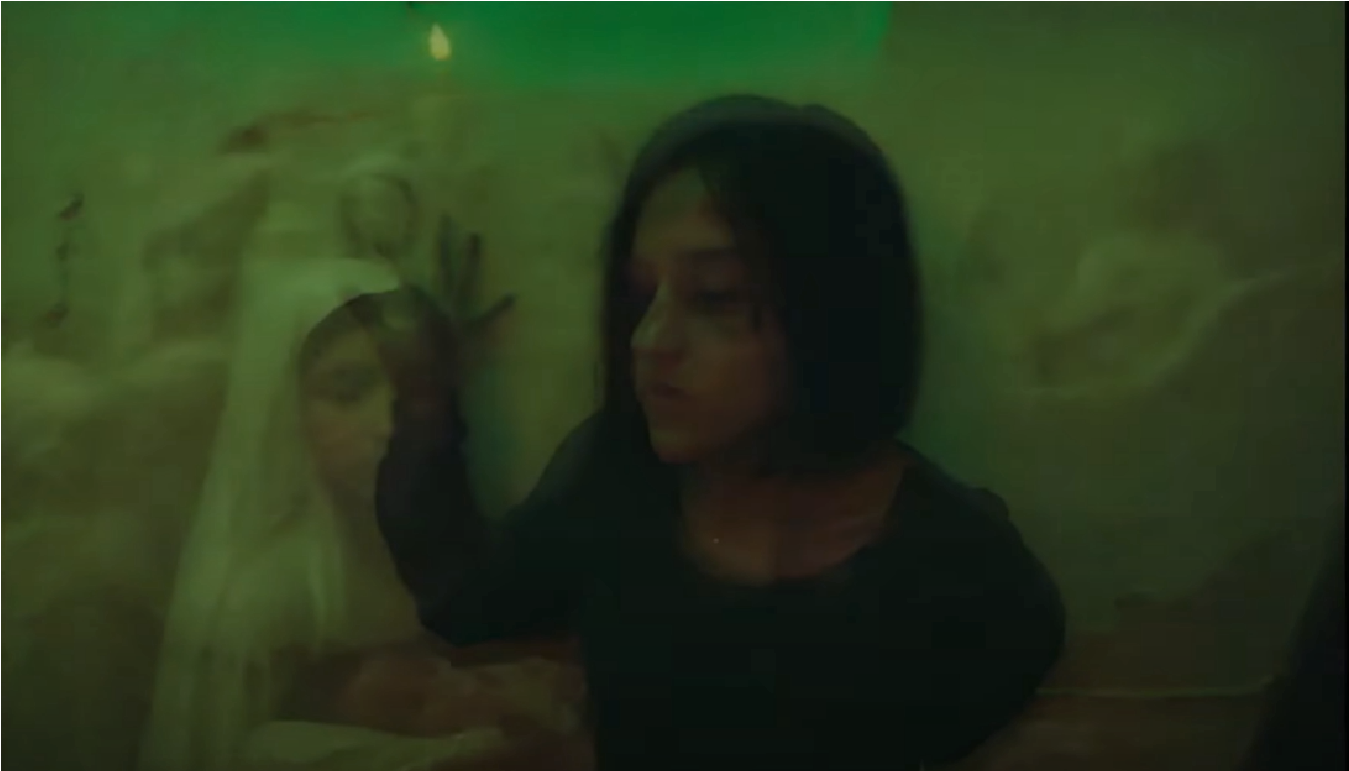
Source. Retrieved from “Instrucciones Divinas para Salvar el Mundo”, La Mesías, by J. Ambrossi & J. Calvo, 2023, 00:58:56.
Figure 1 A frame of the composition made for the case of La Mesías
5.2. Artificial Intelligence in Pesadillas
The music video for the song Pesadillas was released by Lola Índigo on September 13 2024. The work was directed by Martina Hache, a young Spanish director of photography who belongs to the feminist collective SALEM, alongside other emerging filmmakers such as Sara Gallego and Mar Crespo, whose careers are particularly linked to the music and advertising industries. She has directed commercials for the leftist political party Unidas Podemos, the department store El Corte Inglés, electronics companies such as Xiaomi, the streaming platform Netflix, and the restaurant and food brands McDonald’s, Schweppes, and Nocilla, among others.
The video’s focal point is the singer’s experience of a nightmarish episode that leaves her in a state of restless insomnia. The symbolism, akin to that observed in La Mesías, pervades the entire three minutes and 15 seconds of the video. However, the VFX created with AI do not commence until the one-minute and 51-second mark, at which point the protagonist, Lola Índigo, is depicted as being situated in her bedroom. As she reclines on her bed under a subdued bluish spotlight emanating from the window, reminiscent of nocturnal illumination, images of veiled virgin statues swiftly ensue (Figure 2). Angled at one end of the room, the figures emerge in the remaining three corners, their translucent texture highlighted by a beam of warm light that passes through them, thereby enabling their observation. The effects culminate prior to the camera’s closure, which itself is enveloped by a veil, thus prompting the immediate observation of the singer’s startled awakening. The two-second fragment draws parallels with the television fiction previously analysed in terms of the insertion, superimposition and distortion of religious elements through diffusion models implemented by generative IA and the treatment of the images in the composition as a whole.
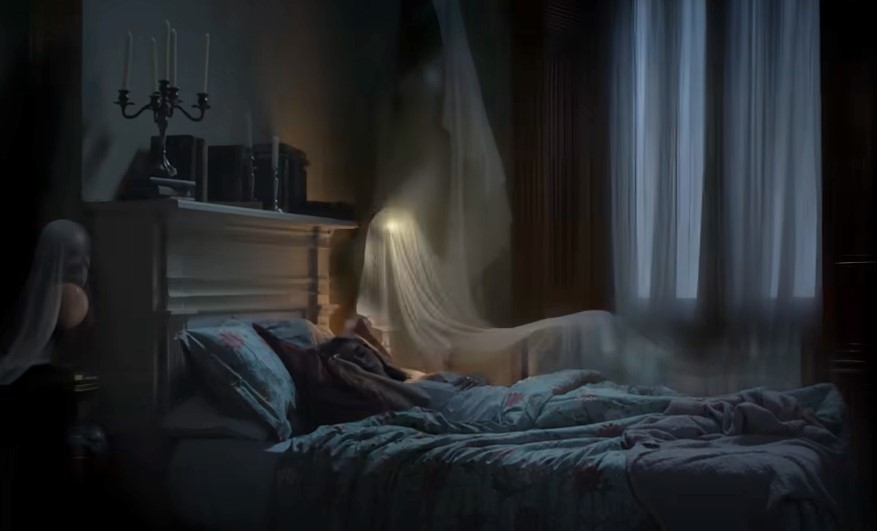
Source. Retrieved from Pesadillas [Video], by L. Indigo, 2024, 00:01:52, YouTube. (https://www.youtube.com/watch?v=A8zRym9HXKM)
Figure 2 A frame of the composition made for the case of Pesadillas
5.3. The Artificial Intelligence Artist Workflow: Stable Diffusion
The in-depth interview allows us to contextualize that the emerging role of the AI artist within the technical and creative process in the audio-visual production for the analyzed case depends on each project: her professional figure has sometimes been integrated from the beginning of the pre-production through the creation of the design, the general visual identity, the visual resources, and so forth. Or the production team has decided to contact her with the aim of fulfilling more specific functions of the different phases, such as the intervention of a particular shot through VFX or the previous preparation of these effects in the storyboard to later implement them with other tools. In the case of La Mesías, Alejandra joined the team when the production phase was very advanced: “I joined once they had practically all the episodes shot” (A. G. López, personal interview, November 10, 2024). This meant that she was able to watch each episode to learn more about the story and “help me contextualize the scene I had to intervene in through the use of AI” (A. G. López, personal interview, November 10, 2024). Due to the lack of references on the use of AI in the Spanish audio-visual sector, directors Javier Calvo and Javier Ambrossi opted to give him creative freedom: “it was many months of trial and error trying not only to tweak the AI technically, but I also spent a lot of space giving it a visual language that would fit the symbolic atmosphere we were going for” (A. G. López, personal interview, November 10, 2024).
Given the variety of tools that use generative AI, the specific use of Stable Diffusion in both La Mesías and Pesadillas was not the choice of Alejandra, but “it was a decision of the directors, as it suited them that more chaotic and dreamlike result caused by AI in a scene that has usually been represented with a lot of movement and distortion since editing” (A. G. López, personal interview, November 10, 2024). Diffusion models, such as Stable Diffusion, and other tools like Bard, DALL-E, Make-A-Video, Jukebox, or Midjourney can perform very complex tasks, covering not only video and image production but also text generation, music composition, and more. Additionally, the director’s intervention is crucial in the process of incorporating AI into an audio-visual project, not so much in the technical development of the VFX involved but rather in their seamless integration into the overall aesthetic of the work. Specifically, this type of creative process requires joint work with the post-production department (especially with those professionals linked to the general supervision of VFX), with the latter being in charge of providing the most technical instructions to the AI artist. In this way, once the digital compositing process is started, the editing of the raw scene is carried out from the selected AI tool in collaboration with the VFX team.
In the context of Stable Diffusion, both in La Mesías and Pesadillas, the automated tool is employed for the most mechanical and repetitive tasks, with the objective of further optimisation. Additionally, ControlNet technology is utilised as a digital compositing technique, enabling the selection of the outline of a key element within the frame to apply the necessary variations inside it. This approach results in enhanced realism (Viñolo Locubiche, 2024) and a high degree of VFX integration. In both works, the superimposition and distortion of multiple video sources, each containing a unique array of images, are employed to facilitate interaction within the narrative.
Stable Diffusion also offers the possibility of using the software’s LoRAs (low ranked adapters) or, in Alejandra’s case, applying her own in order to circumvent copyright issues, as well as to utilise them in other audio-visual projects (Julián Gómez, 2023; Redacción AV451, 2023). LoRAs represent a class of small modification models or adapters that facilitate the introduction of variations or alterations to the more general model or SD base model (checkpoint, the original footage on which the effect is applied) through the utilisation of AI (Figure 3). This development marks a recent innovation in the visual arts domain, leading to the evolution of digital compositing into a multi-stage process. It is noteworthy that the LoRAs initially employed in La Mesías, which was created by Alejandra for this purpose, have also been utilised in the music video of Pesadillas, thereby enhancing the realism of the VFX employed.
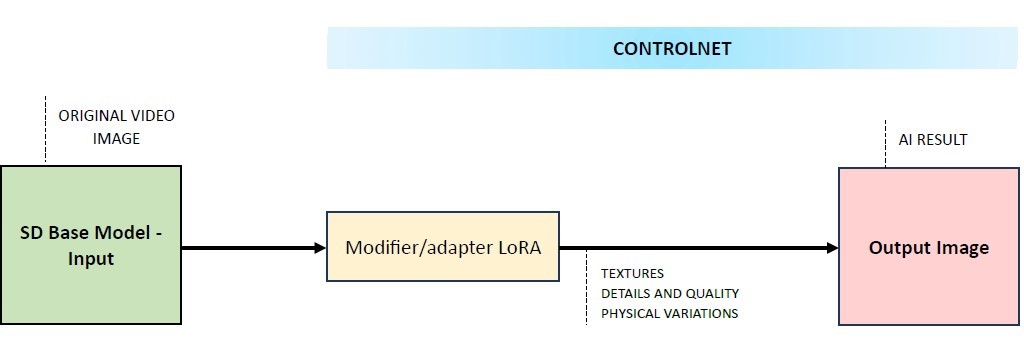
To execute this process, work on the raw footage commences with the application of a textual prompt or input, which initiates the modification of the figure’s attributes. The technical workflow involves conditioning a neural network - referred to as the “base model” - on a textual prompt. This network, which was trained via a diffusion-based denoising procedure on millions of image-text pairs, uses its learned parameters to generate an output that reflects the visual characteristics specified by the prompt. In this manner, the AI artist attains both creative and technical agency over an inherently stochastic generative process by integrating custom-trained LoRA modules with the Stable Diffusion base model. These lightweight adaptations enable precise modulation of specific visual and compositional attributes - such as texture fidelity, physical variability, and the granularity of VFX - without necessitating a full retraining of the underlying network. It is, therefore, essential to employ clear and natural language to ensure that the AI tool, in this case, Stable Diffusion, can apply such variations with greater precision, thereby producing a final image or output that is characterised by minimal errors. The way this software generates an output is contingent upon the database and images used to train the AI, which are organised into a set of distinctive and correlated patterns or categories. The generation of variations on the input from prompts affords the AI artist greater creative freedom, as well as more flexibility and control over the details that shape the final generated image or output. Additionally, it facilitates the elimination of superfluous noise in the image, thereby enhancing visual coherence, which in turn contributes to achieving heightened realism and a high degree of integration. Consequently, the focus is exclusively on the form and structure of the input, namely, the style and aesthetics of the video. A more meticulous observation reveals that the figures of virgins that emerge in both La Mesías and Pesadillas are repetitive in terms of certain elements. This phenomenon is facilitated by ControlNet, a system that enables the replication and subsequent generation of a new image, thereby allowing the AI artist to conserve working time.
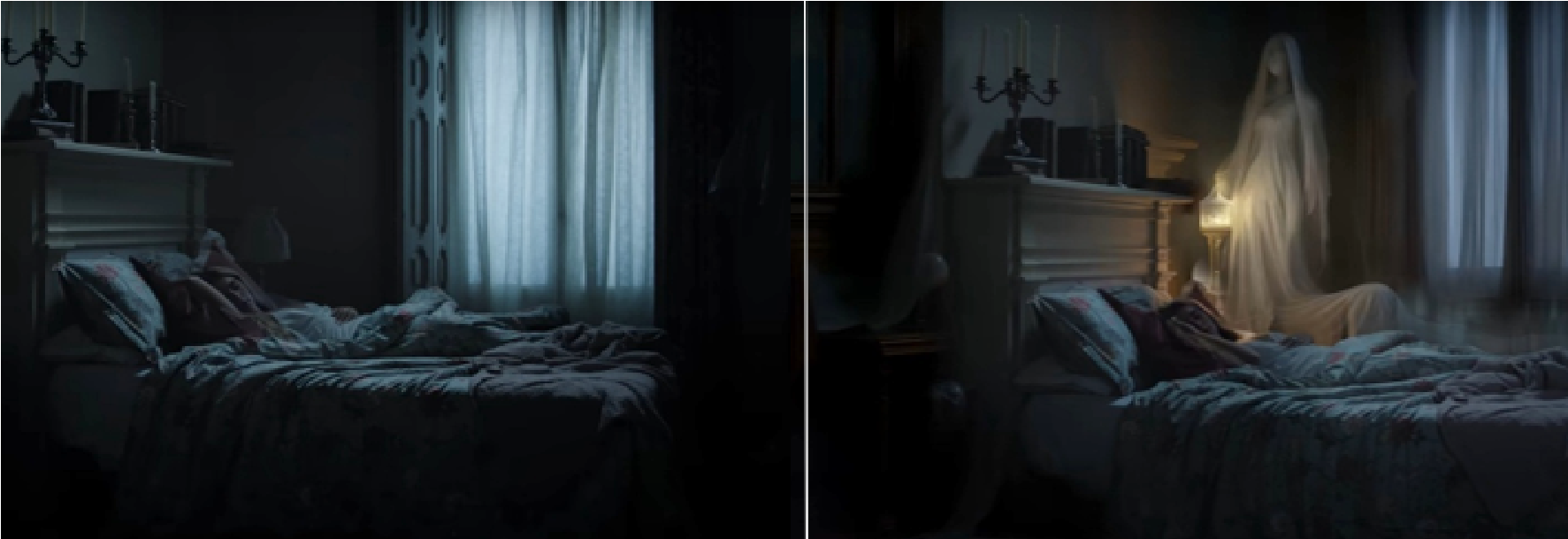
The implementation of AI on real images involves a series of steps that can be augmented by additional phases to incorporate secondary VFX. This approach is exemplified in La Mesías, where the figures selected for variations or superimposition of images underwent a distortion process, serving both artistic and realistic purposes, particularly in the depiction of psychedelic drug effects experienced by Irene’s character (Figure 4). This aesthetic, applied to the protagonist of the series, is not replicated in Pesadillas, as the figure of Lola Índigo, an output, retains its outline. However, the inclusion of the sculptures of the virgins introduces a distorting effect that is achieved through the LoRAs utilized.
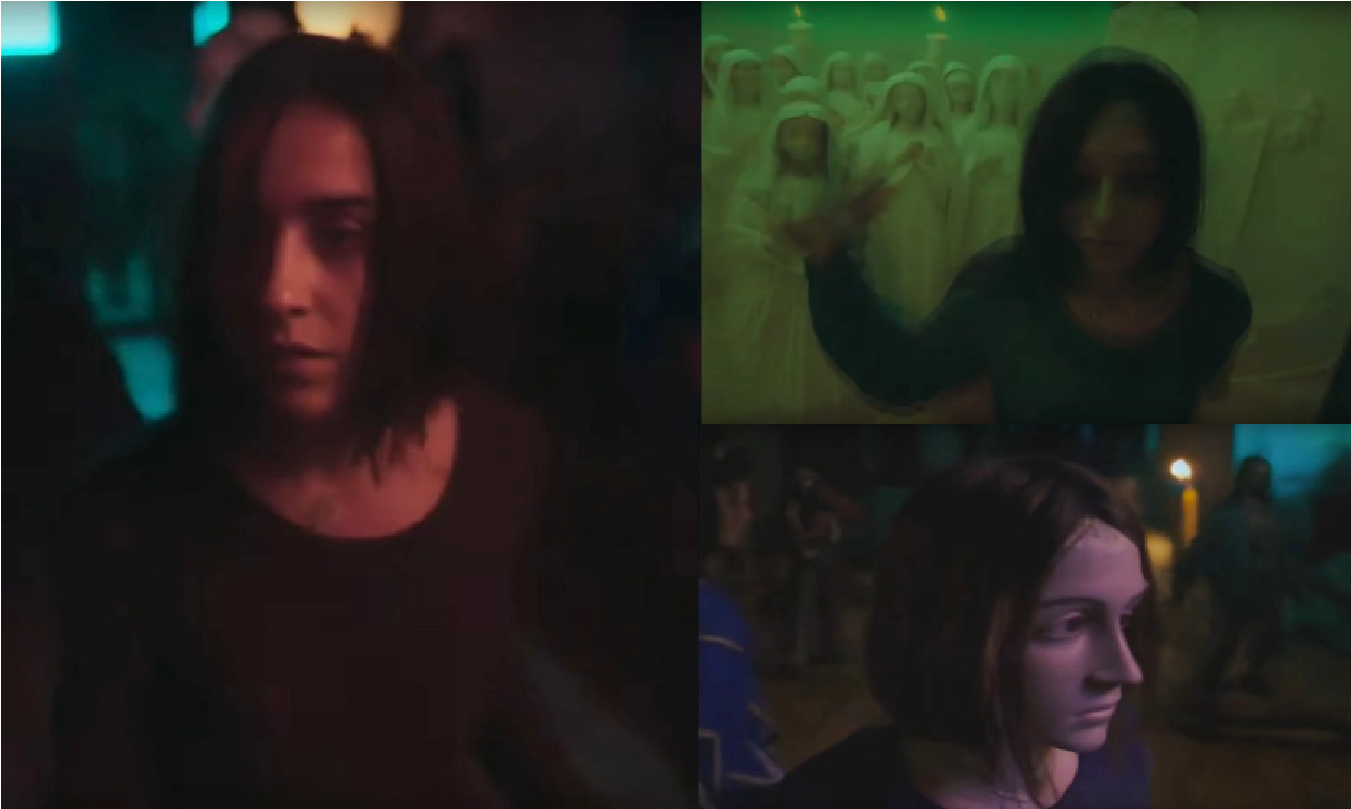
Source. Retrieved from “Instrucciones Divinas para Salvar el Mundo”, La Mesías, by J. Ambrossi & J. Calvo, 2023, 00:58:56
Figure 4 Comparison of original footage (left) and Stable Diffusion output (right) in La Mesías.
In addition to this effect, the protagonists of La Mesías and Pesadillas feature a combination of a model applied as a deepfake, which allows the AI-generated character’s face to be superimposed on that of the actress or singer serving as the narrator. In the first case, the teenage version of Irene appears in the first seconds of the psychedelic effects, whereas in the music video, a new image of Lola Índigo is generated based on the original model (Figure 5). Once again, this type of tool is used to express an aesthetic purpose since, on the one hand, it visually represents the trauma experienced by the character during her adolescence, and on the other hand, it generates a sensation of physical stagnation during the apparitions of the virgins as part of the nightmares, expressing the impotence in the face of the nightmares. In this way, techniques such as deepfake make it possible to refine the output image with greater detail, erasing any traces of artificiality that the use of AI tools might initially reveal in comparison with the rest of the image.
Source. Retrieved from Pesadillas [Video], by L. Indigo, 2024, 00:01:52, YouTube. (https://www.youtube.com/watch?v=A8zRym9HXKM)
Figure 5 Comparison of original footage (left) and Stable Diffusion output (right) in Pesadillas
6. Discussion and Conclusions
The research has made it possible to locate, contextualise and analyse the technical-creative potential of the AI artist in the audio-visual post-production workflow within the Spanish industrial context. In the first instance, it has been located within the digital compositing and VFX phase within the set of sequential and parallel processes that make up the pipeline, identifying that the tool implemented for the proposed case study, Stable Diffusion, has been developed in recent years after the outbreak of the last period of innovation in this field of research, inaugurated by ChatGPT in 2022 (Bengasi et al., 2024). This particular typology of applications is the one that enjoys the highest standardisation in the current audio-visual industry, as demonstrated by previous research (Caballero, 2023).
The generative practices studied are not only based on automating repetitive processes. Still, they can also be attributed to creative skills, where the human intervention of professionals with a high degree of specialisation in the field remains key to configuring the modifiers and adapters introduced into the tool after the input has been defined. The analysis carried out has highlighted the fundamental importance of the LoRAs (the modifiers through which the variations on the original footage are generated); it has also shown that these technical parameters can be defined as the link between the generative practice of AI and the digital artist, essential to obtain a result tailored to the needs of the audio-visual project. If the gallery of personal looks is the trademark style of the colourist, in the case of the AI artist, the creation and definition of his own LoRAs is his added value as a professional.
On the other hand, the study of its incorporation into the global workflows that make up audio-visual post-production has confirmed that, far from replacing jobs in the audio-visual industry linked to this professional speciality, the use of this tool is used in conjunction with the rest of the digital compositing and VFX applications to achieve a specific aesthetic effect, without in any way replacing them. In fact, at this initial stage of the incorporation of generative IA in the Spanish audio-visual industry, it can be seen from the two examples analysed that this is the main reason for the use of this technology:
I think it was a very successful use of AI. It was my first encounter with AI in the Spanish audiovisual landscape, and it worked as expected. With it, we managed to achieve a more chaotic and surreal result, one with a personality that differentiated the scene from other treatments in films and series, where the limitations of the AI at that time helped to convey the sensations caused by a state of “hallucination”. (A. G. López, personal interview, November 10 2024)
The combination of the compositions generated from the output with another generative practice, such as deepfake, highlights the potential of combining both tools as new possibilities for artistic expression in the field of audio-visual creation, in addition to the formulations of enhanced realism already studied by authors like Viñolo Locubiche (2024). The mixture of different video sources with distinct visual styles also allows us to discuss whether generative visual intelligence has its own visual style beyond the effects of the same superimposition of images in the form of pastiche, emphasizing visually attractive components to generate an environment of synthetic reality with great potential for the edition of a type of sequences in audio-visual fiction and music videos, which seek the creation of a dreamlike atmosphere and with aesthetic alterations that do not follow the laws of physics. The findings corroborate prior research evidence insofar as the integration of these particular visual styles during post-production introduces novel avenues for creative expression, markedly transforming the traditional dynamics of content creation (Arrojo, 2024; Pandy et al., 2025). Conversely, recent practice-based studies on the Stable Diffusion tool and its application in artistic practice have also identified certain drawbacks, notably a reduction in the quality of the resulting audio-visual content due to the absence of the human creativity characteristic of traditional methods (Oshan & Piumantha, 2024).
Similarly, the study’s limitations must be acknowledged, as the findings cannot be generalised to the entire Spanish or international film industry. Nonetheless, its exploratory character allows for a focused discussion on the integration of generative AI into the audio-visual post-production workflow, particularly through the emerging role of the AI artist, as illustrated by recent implementations in the creative industries. Notably, this professional profile played a pivotal role in the science-fiction thriller The Great Reset (Virtual World Pictures, 2025), an entirely AI-generated production showcased in February 2025 at the European Film Market of the Berlin International Film Festival. For this project, diffusion models for image synthesis, animation, and post-production were employed (Virtual World Pictures, 2025). A parallel intensification of AI-driven aesthetic strategies can also be observed in the music video “Un Diamante Es Para Siempre 2.0” (A Diamond Is Forever), a 2025 reissue by El Norte of their 1987 single, which similarly foregrounds explicitly generated AI elements (Cadena 100, 2025).
Likewise, reports from industrial contexts such as the North American film industry suggest the incorporation of analogous professional profiles within this sector; among these, the launch of Staircase Studio merits particular mention, as this production company aims to produce thirty films over four years through the deployment of generative AI software (Fuster, 2025b). In the field of VFX, several developers argue that generative AI software may attain sufficient sophistication to be integrated into the production workflows of major studios. This is highlighted by the experimental partnership between Runway and Lionsgate, whose preliminary outcomes remain insufficient in resolution for seamless integration into established processes (Fuster, 2025a). In any case, a future line of research stemming from this exploratory study involves systematizing and identifying visual patterns through the comparative analysis of audio-visual representations across different industrial contexts, as well as examining elements of continuity and discontinuity within established workflow processes.

