




 Inglês (pdf)
 Artigo em XML
 Referências do artigo

 Tradução automática
 Enviar este artigo por email
 Citado por SciELO
 Similares em
SciELO

 Permalink


1. Introduction
Tourism plays a crucial role in the economy, being one of the main generators of employment and wealth. Tourism is the largest export activity in Portugal, representing 7.8% of the national gross domestic product (GDP), highlighting its importance for the country’s economic development (Actus Agro, 2023). Urban tourism, focusing on city exploration, has been increasingly significant among the various facets of tourism. However, rising competition, both nationally and internationally, has led cities to adopt innovative strategies to differentiate themselves in the global tourism market (Nursanty et al., 2017). Globalisation and intensified competition have driven cities to create strong brand identities, aiming for a unique market position (Liouris & Deffner, 2005). In this context, city branding has become essential for attracting tourists, significantly influencing their destination choices (Caldwell & Freire, 2004). Research on destination image and place marketing has accompanied this phenomenon, becoming a relevant field of study (Költringer & Dickinger, 2015).
With the evolution of Information and Communication Technologies (ICT), social media has proven to be a powerful tool in tourism marketing, allowing direct and personalised communication with potential tourists (Gretzel et al., 2000). With its ability to disseminate content broadly and accessibly, social media complements traditional promotional strategies, increasing the visibility and attractiveness of tourist destinations (Barbe et al., 2020). Additionally, user-generated content (UGC) has gained prominence as a reliable source of information, especially regarding sharing authentic travel experiences (Dedeoğlu et al., 2020). In this context, Instagram has emerged as a visually oriented platform where high-quality photographs play a crucial role in shaping the image of tourist destinations (Kirillova & Chan, 2018; Stepchenkova & Zhan, 2013). Sharing photos on these platforms stimulates travel desire and shapes potential tourists’ perceptions of the destinations’ ability to meet their expectations (Schmallegger et al., 2009).
Given the growing importance of social media in tourists’ decision-making, recent studies have focused on tourist behaviour and their interaction with these platforms (Denizci Guillet et al., 2016), reinforcing the role of tourists as active promoters of destinations (Revilla Hernandez et al., 2016). The growing adoption of biometric techniques has significantly enhanced the ability to study how tourists perceive and process visual content. Among these techniques, eye-tracking is a powerful method for assessing visual attention with precision, offering insights into subconscious cognitive processes. It measures how long and where individuals focus their gaze when exposed to visual stimuli, making it particularly valuable for tourism research. Eye-tracking enables a more accurate understanding of tourists' perceptual patterns, revealing preferences that often escape traditional self-reporting methods.
Wang and Sparks (2016) showed that visual attention to tourism photographs is influenced by specific features such as ethnicity and image composition, and these patterns have a measurable impact on preference and image evaluation. More recently, Savin et al. (2022) argued that eye-tracking provides a robust framework for assessing the effectiveness of destination branding, campaign materials, and user-generated images. These studies suggest that tourists' gaze behaviour can inform more strategic visual communication. Eye-tracking has been combined with other biometric tools, such as galvanic skin response, to explore emotional engagement with visual branding. Calderón-Fajardo et al. (2024) demonstrated that this multimethod approach supports a deeper understanding of how tourists emotionally respond to design elements, reinforcing the potential of neurotourism research.
The focus in the UNESCO Creative Cities Network stresses the need for the cities to be broadly and immediately recognised for their particular attributes, such as gastronomy, design, literature, and music. Although the creative city label can offer a strategic advantage in tourism positioning, little is known about how these designations are communicated visually or whether they influence audience perception (UNESCO Creative Cities Network, 2023). While previous research has examined the economic or policy-related impacts of UNESCO designation, few studies have explored how these attributes are reflected in visual media or whether they affect visual attention. This lack of studies creates a relevant gap in understanding whether culturally aligned imagery can enhance visibility and influence users’ engagement on platforms like Instagram. Therefore, the study's main objective is to assess the role of visual communication through images in contemporary destination marketing. Specifically, the research investigates whether visual cues consistent with a city’s creative identity are more effective in attracting attention and shaping preference. To achieve the objective, the study employs eye-tracking to analyse how participants engage with Instagram images shared by municipalities designated as Creative Cities, assessing which visual characteristics most effectively capture attention and influence destination image formation.
2. Literature review
2.1 Social Media and Tourism Promotion
The widespread use of social media has transformed how tourists communicate and share information, creating opportunities for content exchange and feedback (Hays et al., 2013; Macedo et al., 2021). Platforms such as Facebook, Instagram, and Twitter have become efficient and low-cost marketing tools, enabling instant and global communication that impacts destination promotion (Javed et al., 2020; Y. Lu et al., 2018; Schaffer, 2015), providing information about destinations based on reviews, comments, and shared photographs (Toscano, 2017; Xiang & Gretzel, 2010). Tourists use user-generated content throughout all trip stages to plan their experiences (Marine-Roig, 2019; Sotiriadis, 2017). The high volume of visual content, especially photographs, directly influences the formation of a destination’s image and travel decisions (Deng & Liu, 2021). As a result, these platforms strengthen relationships with tourists before, during, and after their trips (Kaplan & Haenlein, 2010).
DMOs recognise the potential of social media, using platforms such as Instagram, Facebook, and YouTube to complement traditional promotional methods (Hays et al., 2013; Uşaklı et al., 2017). These organisations analyse tourist interactions on social media to adapt their marketing strategies, leveraging direct engagement with travellers to improve services and enhance the image of destinations (Dijkmans et al., 2015; Fait et al., 2016).
2.2 User-Generated Content
User-generated content (UGC) is seen as spontaneous and passionate feedback, free and accessible anywhere, including text, images, and videos (Guo et al., 2017; Pourfakhimi et al., 2020). This content, created and shared mostly without commercial intent, is prevalent on platforms such as Instagram (W. Lu & Stepchenkova, 2015; Naab & Sehl, 2017). In the process, online users play different roles: consumers (who do not interact), participants (who interact), or producers (who create and share content) (Gruen et al., 2006; Shao, 2009).
UGC combines opinions, facts, and consumer experiences and is considered less biased, more persuasive, and more credible than traditional marketing content (Filieri et al., 2019; Sparks & Browning, 2011). It is understood that positive reviews enhance the attractiveness and image of destinations (Mauri & Minazzi, 2013), which is more useful than traditional channels for user interactions, generating perceived value (Schivinski & Dabrowski, 2014). In tourism, UGC influences decisions and expectations, with tourists relying on the shared experiences of others (Dedeoğlu et al., 2020; Leung et al., 2017). Recent studies further confirm that UGC significantly influences tourist visit intentions by enhancing destination imagery's emotional and cognitive dimensions(Aboalganam et al., 2025).
Tourism is a visual industry where photographs have always been central in promoting destinations (Siegel et al., 2020). According to Gretzel (2017), photography is an essential component of the tourist experience, influencing how tourists consume and experience destinations. The ability to instantly capture and share images on social media has revolutionised tourist behaviour, integrating photographic practices as a crucial part of the travel experience (Ghorbani et al., 2023; Li et al., 2023). With technological advancements, especially smartphones, user-generated photographs (UGP) have become even more significant. The quality of smartphone cameras and easy access to filters encourage tourists to share their images, reinforced by the gratification from “likes” on social media (Ames et al., 2010). This proliferation of images significantly impacts tourists’ motivation and decisions and promotes tourist attractions on digital platforms (Y. Kim & Son, 2018).
Photos tourists share reflect their perspectives and emotions about a destination and provide authentic representations of the values and meanings associated with these places (Alaily-Mattar et al., 2023; Deng & Liu, 2021). Studies show that photographs influence tourists’ choices, who often seek iconic landscapes recognised by other travellers, enhancing the images' impact and fostering digital interaction (Y. Kim & Son, 2018). However, tourism authorities face the challenge of monitoring these images to control the potential positive or negative impacts on destination image (Siegel et al., 2020) since the ease of sharing photos on platforms like Instagram can dramatically shape and even alter the perception of a destination (Agustí, 2022; Rahman et al., 2021).
However, at the same time, tourists have started to show scepticism towards highly idealised images shared by DMOs, preferring user-generated photos that they consider more authentic and representative of the “real world” (Zhou & Xue, 2021). They seek images that convey feelings, connections with places, and genuine experiences (Barbour & Heise, 2019), and photographs function as declarations of affection for destinations, highlighting attributes such as landscapes, architecture, culture, and food, accompanied by positive emotions like pleasure and belonging (Filieri et al., 2021). Thus, travel photos have become an integral part of tourist experiences, reflecting the experience and the perceived image of the destination (Jalilvand & Samiei, 2012; Vu et al., 2018) and serving as “proof” of the tourist’s presence, with the travel experience seen as incomplete if they are not shared them (Munir & Phillips, 2005).
2.3 Instagram
Instagram, launched in 2010, allows users to instantly share photos and videos with followers, becoming one of the most influential social networks alongside TikTok (Faßmann & Moss, 2016; Sulaiman et al., 2023). It currently has around 5 billion users, representing 59.4% of the global population, and is the third most-used platform worldwide (Belanche et al., 2021; Kemp, 2023). Portugal has over 6 million active Instagram users, corresponding to 62% of the population (Luz, 2023).
As a visual social network, Instagram stands out for the significant interaction it generates and is widely used to obtain information (Gretzel, 2018; Sukunesan et al., 2020). The app revolutionised how content is shared, allowing users to post opinions in UGC formats (O’Hern & Kahle, 2013). In addition to personal accounts, businesses and DMOs use the platform to promote destinations, products, or services for free, leveraging hashtags and geotags to facilitate content discovery (Fadjar et al., 2022; Holak & McLaughlin, 2017). Over 95 million photos are shared daily on Instagram (Aslam, 2023), many related to tourism, with aesthetically designed images shaping the perception of destinations (Volo, 2020). DMOs recognise the fundamental role of users’ photos in promoting destinations, making it essential to understand how users generate content and contribute to the tourist image (Fatanti & Suyadnya, 2015). Instagram posts significantly influence travel decisions, creating expectations and forming the destination image in tourists’ minds (Bruyn & Lilien, 2008; Özdemir & Çelebi, 2015; White, 2010).
Several studies indicate that Instagram is a strategic tool for destination promotion and marketing, with DMOs encouraged to engage with user-generated content to strengthen the destination brand (Fatanti & Suyadnya, 2015; Narangajavana et al., 2017; Xiang & Gretzel, 2010). Thus, images and videos shared on Instagram become crucial in building the tourism identity, reflecting tourists’ experiences (Bronner & de Hoog, 2010; Sultan et al., 2021).
Instagram’s focus on aesthetic quality and visual storytelling makes it a key platform for understanding how images influence tourists’ cognitive and emotional processing. Research has shown that the composition, colour, and emotional resonance of images on Instagram directly shape tourist perceptions, preferences, and destination image formation (Blanco-Moreno et al., 2024; J. Kim & Fesenmaier, 2017; Volo, 2020; Savin et al., 2022). In this context, visual attention is not merely a reaction to beauty or familiarity but a cognitive gateway to deeper engagement with the symbolic and cultural meanings embedded in the image (Gretzel, 2017). Moreover, user-generated photos are perceived as more credible and emotionally authentic than official marketing content (Rahman et al., 2021; Zhou & Xue, 2021).
2.4 Foundations for Visual Attention and Destination Image
This study is conceptually supported by three interrelated theoretical foundations that help explain how visual content influences tourist perception, attention, and behaviour in a digital context. These frameworks provide the necessary structure for analysing how culturally symbolic imagery shared on Instagram contributes to the visual construction of destination image, particularly in urban settings characterised by cultural and creative positioning.
The first and most central framework is the Destination Image Formation Theory (Baloglu & McCleary, 1999; Beerli & Martín, 2004), which posits that individuals construct mental representations of destinations based on cognitive and affective evaluations. Cognitive evaluations refer to beliefs and knowledge about the destination, while affective evaluations relate to emotional responses. A combination of personal experiences, external stimuli, and sociocultural representations shapes these components. In the context of social media, particularly platforms like Instagram, photographs act as powerful projective mechanisms that contribute directly to this image formation process. Previous research has shown that social media images influence tourists’ impressions before travel, anchoring expectations, desire, and eventual satisfaction (Kirillova & Chan, 2018; Stepchenkova & Zhan, 2013).
Second, the study is grounded in visual attention theory (Ohanian, 1990; Wang & Sparks, 2016), which offer the conceptual foundation for adopting biometric methods such as eye-tracking. This group of theories suggests that human attention is selective and limited and that individuals allocate their visual focus toward elements perceived as salient, emotionally relevant, or personally meaningful (Wang & Sparks, 2016). Eye-tracking allows researchers to accurately capture these attention patterns in real-time, revealing subconscious responses that traditional methods such as interviews or questionnaires often fail to detect (Savin et al., 2022). In tourism research, eye-tracking has already been used to evaluate the effectiveness of promotional materials, advertising layouts, and destination websites, detecting both attentional focus and emotional resonance (Calderón-Fajardo et al., 2024).
The third theoretical pillar relates to User-Generated Content (UGC) and Source Credibility Theory (Cheung et al., 2009; Filieri et al., 2015, 2019), which addresses how consumers evaluate and are influenced by the source of information. UGC is widely perceived as more authentic, trustworthy, and emotionally engaging than traditional marketing content because it is produced by peers rather than institutions (Dedeoğlu et al., 2020; Zhou & Xue, 2021). Photographs shared by tourists or local communities are often interpreted as more realistic representations of the place, conveying increased emotional attachment, cultural familiarity, and a sense of lived experience (Barbour & Heise, 2019). This authenticity increases the persuasive power of the content and strengthens its impact on destination image, particularly when tourists identify with the people or narratives represented. Accordingly, Instagram posts by users or municipalities function as marketing tools and socially constructed endorsements that influence attention, perception, and, ultimately, behavioural intention (Y. Kim & Son, 2018; Vu et al., 2018).
3. Methodology
This study addresses the underexplored intersection between destination branding, user-generated visual content, and biometric analysis. While prior research has examined the influence of UGC on destination image (Dedeoğlu et al., 2020; Leung et al., 2017), and others have highlighted the symbolic importance of UNESCO’s Creative City designations, no previous study has applied eye- tracking technology to evaluate visual engagement with Instagram images specifically linked to the Creative Cities Network. This methodological innovation allows the current research to contribute theoretically and practically by analysing subconscious visual attention in a cultural tourism context. The originality of the design also lies in the use of real municipal content submitted by ten Portuguese Creative Cities, ensuring ecological validity and strategic relevance for DMOs.
The research is based on UNESCO’s Creative Cities Network (UCCN). It aims to identify the types of images that capture users’ attention most effectively and the attributes they most frequently recognise. The authors intend to assess which content is most appealing to users so that municipalities can publish only those images on Instagram that are likely to generate interaction from their audience.
UCCN consists of 350 cities and was established in October 2004 to promote and foster cooperation among cities that use creativity as a strategic factor for sustainable urban development (UNESCO Creative Cities Network, 2023). This network encompasses seven categories: City of Crafts and Folk Arts, City of Media Arts, City of Cinema, City of Design, City of Literature, City of Music, and City of Gastronomy. According to UNESCO (2023), by joining this network, cities commit to sharing their best practices and developing partnerships involving both the public and private sectors, as well as society, with the aim of:
Strengthening the creation, production, distribution, and enjoyment of cultural goods and services at the local level;
Promoting creativity and creative expressions, especially among vulnerable groups, including women and youth;
Improving access to and participation in cultural life, as well as the enjoyment of cultural goods; and
Integrating cultural and creative industries into local development plans.
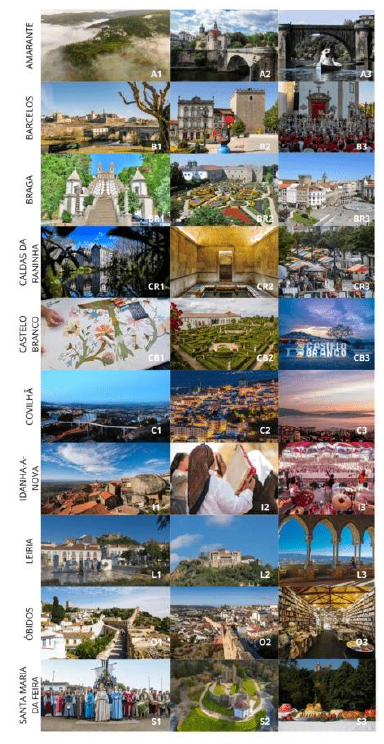
This investigation focused on the 10 Portuguese cities belonging to this network. In the initial phase of the study, the authors requested that Portuguese municipalities within the UCCN (Idanha-a-Nova, Óbidos, Amarante, Barcelos, Braga, Caldas da Rainha, Leiria, Covilhã, Santa Maria da Feira, and Castelo Branco) provide three images that best represented their cities. After receiving the images, an eye-tracking study was conducted with 30 participants to determine which image from each city captured users’ attention the most, which aligns with standard practices in exploratory eye-tracking research. Prior studies have shown that this sample size is sufficient to detect meaningful patterns of visual attention, particularly under controlled laboratory conditions and when the stimulus set is consistent across par-ticipants (Savin et al., 2022; Wang & Sparks, 2016).
The eye-tracking methodology involves using specialised technology to record and analyse participants’ eye movements in response to visual stimuli, such as images or videos (Holmqvist et al., 2011). This technique is based on six key elements: eye- tracking technology, device calibration, presentation of visual stimuli, recording of eye movements, data analysis, and interpretation of results (Duchowski, 2007; Holmqvist et al., 2011; Salvucci & Goldberg, 2000). In this study, the Gazepoint GP3 Eye- Tracker and Gazepoint Analysis software were used to record and analyse participants’ eye reactions while viewing images provided by the Portuguese cities of the UCCN.
Each participant viewed 30 images presented in 10 sets of three photographs (one set per city), rotated across participants to eliminate bias. Three versions of the image sets were created to avoid position effects, ensuring that each photo's placement varied within the sets across participants. Each image set was displayed for 15 seconds, with a 0.1-second black screen between sets, totalling approximately 150 seconds of visual exposure per session. The images were displayed at a resolution of 1920×1080 pixels on a 24-inch monitor, under controlled lab conditions, using Gazepoint Analysis software to ensure consistent visual quality.
In the first phase, participants selected their preferred image from each set. In a second phase, the same sets were shown again, and participants were asked to describe which elements caught their attention most. Responses were collected orally and noted by the researchers. All sessions were conducted individually under standardised lab conditions, and a 9-point calibration was performed before each session to ensure data accuracy. In this experiment, the independent variable is the visual stimulus, specifically the images provided by each municipality. The dependent variables are the participants’ biometric responses, including fixation count, fixation duration, and revisits, recorded by the eye-tracking equipment.
The study was conducted at NeuroNECE, the Consumer Neuroscience Laboratory at the University of Beira Interior, on April 17, 2024. Thirty individuals aged between 18 and 60 years residing in various regions of Portugal, including the districts of Castelo Branco (53.34%), Viseu (16.67%), Santarém (6.67%), Leiria (6.67%), Setúbal (3.33%), Braga (3.33%), Portalegre (3.33%), Lisbon
(3.33%), and Guarda (3.33%) participated in the experiment. The sample included 17 women (56.67%) and 13 men (43.33%). Participants were voluntarily recruited. The researcher approached people in the street, briefly explained the purpose of the study, and invited them to participate. Those who agreed were guided to a room prepared for the experimental procedure. The room was arranged to minimise distractions: lighting conditions were kept constant and neutral across all participants. Participants were seated at a standardised distance from the screen (60 cm). No background noise or peripheral visual distractions were present, ensuring a consistent and distraction-free environment for all participants. All participants were informed about the procedures, data handling according to the General Data Protection Regulation (GDPR), and their right to withdraw at any time. Before starting the eye-tracking, researchers confirmed that the participants had no visual impairments that could affect data collection. The study lasted an average of eight minutes per participant. Table 1 presents the sample profile.
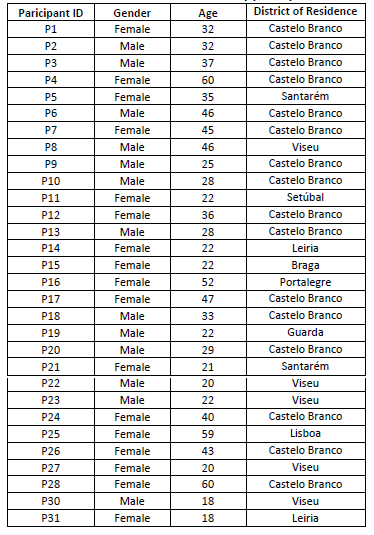
As shown in Table 1, participant 29 was not included in the analysis due to technical errors in the data obtained during the study, as his eye movement was inconsistent. Therefore, a new participant (P31) was recruited for the study. Figure 1 presents the images shared by the cities presented to the participants.
4. Results
The study aimed to determine which image, among the ten different sets, captured the most interest from the participants. Heatmaps, generated through eye-tracking data, wereanalysed to identify the areasof greatest visual attention. Thecolours on the heatmap indicated the density of fixations: warm colours represented areas of high fixation, yellow indicated medium density, and cool colours signified low fixation (Figure 2).
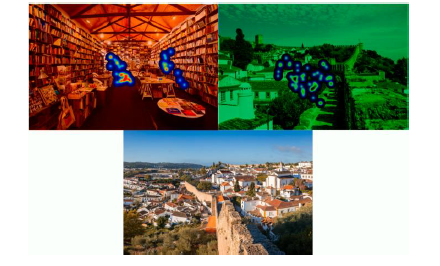
The analysis revealed that participants consistently focused their gaze on specific images, notably A2 (Amarante), B2 (Barcelos), BR2 (Braga), CR1 (Caldas da Rainha), CB2 (Cas-telo Branco), C1 (Covilhã), I3 (Idanha-a-Nova), L3 (Leiria), O1 (Óbidos), and S2 (Santa Maria da Feira). These findings indicate the elements that naturally draw attention and hold aesthetic appeal in visual tourism content.
A closer analysis of the choices highlighted that cities with images directly related to their creative areas within the UNESCO Creative Cities Network (UCCN) tended to receive higher fixation times. For instance, images that showcased unique cultural or architectural features were particularly effective in drawing initial visual attention. However, it was also observed that participants often selected alternative images as their preferred choices during subsequent evaluations. This divergence suggests a two-stage decision-making process: an initial phase where attention is drawn to recognisable or striking elements, followed by a preference phase where personal, emotional, or contextual factors come into play.
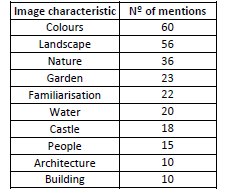
A follow-up questionnaire was conducted to identify and articulate the characteristics that caught their attention the most to better comprehend participants' preferences. The images were reintroduced with the same features, allowing participants to provide detailed qualitative feedback. This procedure revealed 133 descriptive words, shedding light on the attributes that resonated most with the audience. Among these, "colours" (60 mentions), "landscape" (56 mentions), and "nature" (36 mentions) emerged as dominant themes, underscoring their universal appeal. Beyond these commonly mentioned characteristics, other notable features were highlighted, including "familiarity" (22 mentions), "architecture" (10 mentions), and "building" (10 mentions). These results point to the importance of emotional resonance and recognition in shaping visual preferences. Participants were particularly drawn to images that reflected familiar cultural or environmental contexts, suggesting that visual content resonates more effectively when it aligns with individuals' existing mental schemas of a destination. Table 2 shows a summary of the characteristics mentioned by the participants.
5. Discussion
The findings provide empirical support for the theoretical frameworks. The observed visual attention patterns align with Visual Attention Theory, confirming that participants consistently focused on salient elements such as vibrant colours, natural landscapes, or culturally distinctive features. This finding suggests that attention is driven by aesthetic qualities and symbolic relevance, especially in the context of Creative Cities. Moreover, the divergence between initial fixations and preferred image choices reflects the dual-process structure proposed by the Destination Image Formation Theory (Baloglu & McCleary, 1999; Beerli & Martín, 2004). While certain images captured immediate attention due to visual impact, final preferences were shaped by deeper cognitive and affective evaluations, including personal familiarity, emotional connection, and perceived cultural authenticity. By applying the Destination Image Formation Theory, the study shows that visual stimuli do not act in isolation but interact with users’ prior knowledge, emotional states, and symbolic associations. Similarly, the application of Visual Attention Theory is validated through the heatmap data, which revealed that images with higher aesthetic salience and cultural specificity received initial attention. Finally, the principles of Source Credibility Theory are reinforced by the participants’ preference for imagery perceived as authentic and emotionally relevant, confirming the persuasive value of user-generated or municipally curated images that reflect real-life aspects of place identity.
The role of user-generated content and source credibility also emerges clearly in participant preferences. Images perceived as more authentic, relatable, or emotionally evocative tended to be described in terms of real-world experience and symbolic meaning, supporting previous research that positions UGC as more persuasive and trustworthy than traditional promotional content (Dedeoğlu et al., 2020; Zhou & Xue, 2021). Therefore, the results support the idea that user-centred imagery, even when produced or shared by municipalities, can function as social proof, reinforcing the credibility and appeal of a destination. This theoretical alignment highlights the relevance of applying eye-tracking in tourism marketing research, as it allows for capturing unconscious cognitive processes that underlie destination image construction and decision-making. These observations support the theoretical proposition that destination image formation is a layered process, influenced initially by visual salience and later by cultural and emotional relevance (Baloglu & McCleary, 1999; Beerli & Martín, 2004).
The findings suggest a two-stage decision-making process by showing that culturally aligned images (e.g., those representing gastronomy or crafts in relevant cities) often generate higher fixation densities but are not always preferred later. This distinction between attention and preference is essential for DMOs who wish to move beyond vanity metrics such as likes or impressions and understand the cognitive journey of users interacting with digital content. These results corroborate prior work by Wang and Sparks (2016), who high-lighted the influence of image composition and cultural elements on attention, but did not explicitly address the dissociation between visual fixation and final preference. Moreover, the findings empirically extend the Destination Image Formation Theory (Baloglu & McCleary, 1999) by capturing real-time, biometric evidence of the dual cognitive-affective stages involved in evaluating tourism imagery. This contribution also complements Aboalga-nam et al. (2025), who identified the mediating role of destination imagery in visit intention, by demonstrating how specific visual characteristics elicit initial engagement without necessarily determining user choice. The present study thus enriches the theoretical understanding of visual processing in tourism marketing, particularly through its novel biometric approach.
Furthermore, the influence of symbolic elements like the Barcelos rooster, traditional costumes, or books indicates that Creative City designations are not abstract concepts but can be effectively communicated through targeted imagery. However, the impact of these images is amplified when combined with universally appealing elements such as vibrant colours, nature, and human presence. These findings align with recent neurotourism research highlighting the emotional and perceptual significance of combining aesthetic and cultural features in promotional materials (Calderón-Fajardo et al., 2024).
Compared to Blanco-Moreno et al. (2024), who found that Instagram imagery in cultural tourism promotes feelings of happiness and emotional connection, this study provides a behavioural explanation of why those emotional responses may occur, which relates to attributes like colour and cultural familiarity that hold attention longer and stimulate preference.
In contrast to traditional promotional strategies that often prioritise staged or commercial visuals, this study offers an evidence- based argument for selected content that reflects local authenticity and cultural symbolism, especially in the context of Creative Cities. The symbolic value of elements such as the Barcelos rooster or literature-themed visuals from Óbidos confirms that UCCN designations can be effectively communicated visually, as long as the imagery is also emotionally appealing and relatable. This insight also builds on Kim and Son's (2018) findings about the influence of recognisable landmarks and real-life visuals in shaping perceptions of destination image.
The findings on the importance of visual stimuli align with the findings of Calderón et al. (2024), who emphasised the importance of combining cultural cues with aesthetically pleasing visuals to enhance emotional impact. The current results support and extend the existing evidence by showing that such combinations yield stronger visual engagement at both subconscious and evaluative user decision-making stages. This validates the relevance of incorporating eye-tracking as a diagnostic tool for understanding tourist attention and supports its practical application in content selection by DMOs.
Additionally, the results resonate with Savin et al. (2022), who argued for a neurocognitive approach to destination branding, suggesting that meaningful and emotionally rich imagery facilitates better brand recall and preference. The present study complements their argumentation by showing that participants are more attentive to such imagery and explicitly choose it when asked to reflect on their preferences, providing increased credibility to neurotourism approaches. Globally, the findings offer robust support for integrating biometric research with tourism marketing, providing actionable insights for crafting visually compelling and emotionally resonant destination content on platforms like Instagram.
5.1 Theoretical Implications
This study advances the field of tourism marketing by integrating biometric methodologies, specifically eye-tracking technology, into the analysis of user-generated visual content in the context of UNESCO Creative Cities. Unlike previous research that relied predominantly on self-reported data on engagement metrics, our study provides objective evidence of subconscious visual attention. This novel methodological approach enriches the application of Destination Image Formation Theory, Visual Attention Theory, and Source Credibility Theory by demonstrating how cognitive and affective image evaluations unfold in real-time. By focusing on culturally themed content within the Creative Cities framework, the research extends prior theoretical models to a new domain: culturally driven urban tourism, offering a multidisciplinary lens that connects digital marketing, urban cultural identity, and consumer neuroscience.
Moreover, the study reveals a two-stage cognitive process involving initial visual attention and subsequent emotional preference, an aspect rarely captured in tourism studies. This distinction helps clarify how destination image is constructed and evaluated by potential tourists on platforms like Instagram. As such, the study contributes to theoretical discourse by providing empirical support for the non-linear, layered nature of visual perception in tourism marketing and by affirming the theoretical relevance of neurotourism approaches for investigating subconscious engagement with digital stimuli.
The findings align with established theories on visual engagement and destination branding. For instance, Gretzel (2017) exploration of the "visual turn" in social media illustrates how appealing content fosters emotional and cognitive connections with destinations. Similarly, the work of Kim and Son (2018) highlights the significance of recognisable landmarks in reinforcing a destination’s image and enhancing digital engagement.
Theoretically, the study also contributes to visual communication theory by demonstrating that gaze behaviour is influenced by both the aesthetic properties and symbolic significance of imagery, elements often overlooked in marketing literature. Furthermore, the findings highlight the dynamic role of perceived authenticity in visual preference formation, reinforcing the credibility-enhancing power of user-generated content. As visual content increasingly dominates tourism communication, this research provides the theoretical foundation to better understand the affective and cognitive dimensions influencing tourist behaviour.
5.2 Practical Implications
The eye-tracking results reveal important insights for DMOs and professionals in tourism marketing, communication, and urban planning. The findings reinforce the value of strategic visual content, especially on platforms like Instagram, to strengthen the identity and appeal of culturally creative cities. Carefully curated imagery can foster deeper audience engagement in an increasingly competitive digital tourism landscape.
Beyond stated preferences, this study highlights the need for DMOs to consider objectively measured behaviours such as gaze patterns and fixation. These metrics offer a clearer picture of what truly captures attention and inspires interest. A multidisciplinary approach that combines marketing, psychology, and urban studies can help create content that resonates both emotionally and cognitively with diverse audiences.
The study confirms that visuals with vibrant colours, striking landscapes, human presence, and culturally familiar elements are particularly effective. These features should be central in social media strategies aiming to boost visibility and interaction. Moreover, the growing demand for authenticity points to the strategic value of incorporating user-generated content, which enhances credibility and emotional connection.
Ultimately, balancing aesthetic appeal with cultural authenticity is key. This approach strengthens a destination’s digital presence, fosters trust, encourages sustainable engagement, and contributes to the long-term promotion of cities rooted in creativity and identity.
6. Conclusions
This study explored how tourists visually engage with Instagram content shared by municipalities belonging to the UCCN, focusing on subconscious attention patterns captured through biometric analysis. By applying eye-tracking techniques in a controlled laboratory setting, this research goes beyond surface-level metrics such as likes or shares and provides objective evidence of how visual stimuli are cognitively and emotionally processed. Incorporating content submitted directly by ten Portuguese UCCN cities adds eco-logical validity and ensures that the study reflects real-world communication practices in destination marketing.
The findings reveal that participants respond strongly to images containing culturally symbolic elements, vibrant colours, human presence, and natural landscapes, which capture attention and influence emotional connection and image preference. The divergence between attention and preference leads to the conclusion that visual impact alone does not determine user choices. Rather, cognitive and affective evaluations interact in shaping tourists’ perceptions. This insight offers a richer and more realistic digital engagement model, unlike many prior studies that have relied on self-reports or passive behavioural tracking.
From a broader perspective, this study makes a timely and innovative contribution to tourism marketing by bridging biometric technology, UGC, and cultural branding. Based on the findings, it is possible to conclude that eye-tracking is a technically reliable and theoretically powerful method for studying tourism communication. By aligning visual responses with strategic communication goals, such as those defined by UNESCO’s creative city narratives, this research highlights the potential for culturally rooted imagery to inform and emotionally engage prospective tourists. Broadly, the results validate key theoretical frameworks and provide actionable insights for DMOs, policymakers, and tourism strategists. The study’s conclusions are thus structured in two subsections: the first outlines the theoretical contribution to academic literature, and the second presents practical implications for the field of destination branding and digital tourism promotion.
6.1 Limitations and Future Research
Like all studies, this research has limitations that should be considered when interpreting its findings. The sample is limited to ten Portuguese cities and thirty participants, which constrains the generalizability of the results across broader international, cultural, and linguistic contexts. Furthermore, the visual content analysed was sourced exclusively from Instagram, a platform with specific aesthetic conventions and particular user demographics. As such, the findings may not be directly transferable to other visual- based platforms (e.g., TikTok or Pinterest) or communication formats. These limitations highlight the importance of contextual sensitivity when applying the study’s insights to different tourism environments.
Additionally, the study may have faced specific methodological limitations, such as selection bias or technical limitations in eye- tracking. Although efforts were made to ensure geographic diversity in the participant pool, 53.34% of participants live in the Castelo Branco district, where the study was conducted. This overrepresentation may introduce regional bias and should be acknowledged when interpreting the findings. These limitations can impact the validity and reliability of the results.
To address the limitations presented in this study, future research directions are suggested to fill gaps and expand the investigation into social media and tourism marketing. Firstly, there is room for a deeper exploration of the underlying factors influencing visual attention and aesthetic preferences, using mixed-method approaches that combine quantitative eye-tracking methods with qualitative analyses from interviews and questionnaires. It is important to encourage conducting qualitative studies to evaluate participants’ aesthetic preferences and identify the factors that lead them to prefer one image over another.
It would also be valuable to extend this study to a large sample of UCCN cities from different countries to obtain more generalisable results, identifying whether there are common patterns regarding image selection and mentioning characteristics (e.g., colours, buildings, landscapes).

